Privilege drift inside complex role models

Privilege Drift in Complex Role Models: Root Causes and Containment Strategies

Privilege Drift in Complex Role Models: Root Causes and Containment Strategies A senior engineer changes teams, picks up a new project role, retains the old one for the handover, and inherits three more from a permission set the application team never separated. Six months later, an auditor flags the account for excessive access, and nobody […]

Identity Evidence for CSRD

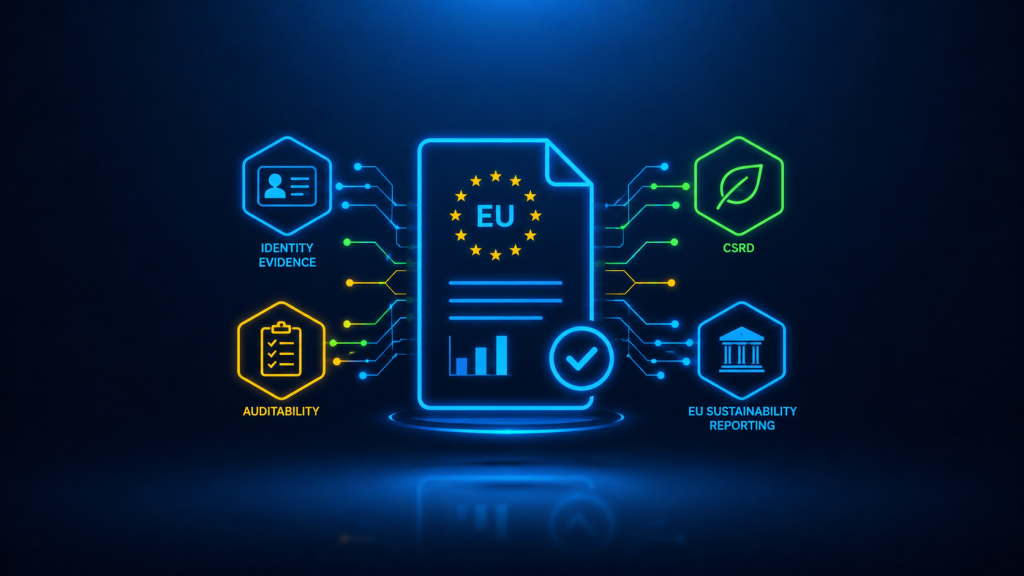
Identity Evidence and Auditability Under CSRD and EU Sustainability Reporting

Identity Evidence and Auditability Under CSRD and EU Sustainability Reporting CSRD assurance under ISSA 5000 requires testing of the internal controls that produce sustainability data. That includes who has access, whether duties are segregated, and whether changes are logged. Four identity artifacts answer those tests: provisioned access with justification, enforced segregation of duties, periodic access […]

Converged Identity Security

Converged Identity Security: Architectural Patterns and Control Boundaries for IGA, PAM, and ITDR

Converged Identity Security: Architectural Patterns and Control Boundaries for IGA, PAM, and ITDR The convergence story is everywhere across vendor marketing, but the convergence architecture is rarely explained. Most vendors describe converged identity security as a single platform that handles identity governance, privileged access, and threat detection together, and the marketing implies the three disciplines […]

Why Identity Governance Must Be Engineered at the Core?

Why Identity Governance Must Be Engineered at the Core? In a digitally interconnected enterprise environment, security cannot be treated as a reactive control layer. It must be embedded within foundational architecture. Identity governance represents the first enforceable control surface in modern IT ecosystems. When organizations delay investment in structured identity management, they introduce systemic risk […]

Agentic Identity Governance: Moving from Reactive Workflows to Continuous Risk Control

Agentic Identity Governance: Moving from Reactive Workflows to Continuous Risk Control Identity governance has traditionally been built around structured workflows. An access request is submitted, routed for approval, provisioned in the relevant system, and later validated through a certification campaign. While this model improves consistency and reduces manual effort, it remains fundamentally reactive. Most governance […]

Europe’s Compliance Overhaul Is Forcing a New Era in Identity Governance

Europe’s compliance landscape is undergoing a historic transformation. What began as sector-specific cybersecurity directives has evolved into a continent-wide push for continuous accountability. With new frameworks such as NIS2, DORA, the Cyber Resilience Act, and stricter GDPR enforcement, enterprises can no longer rely on static policies or manual audits. The European Union has made its […]