

SAP IDM END-OF-LIFE SERIES · 2 OF 3 · COMPARISON
Your SAP IDM Options: Microsoft Entra vs a Full IGA Platform
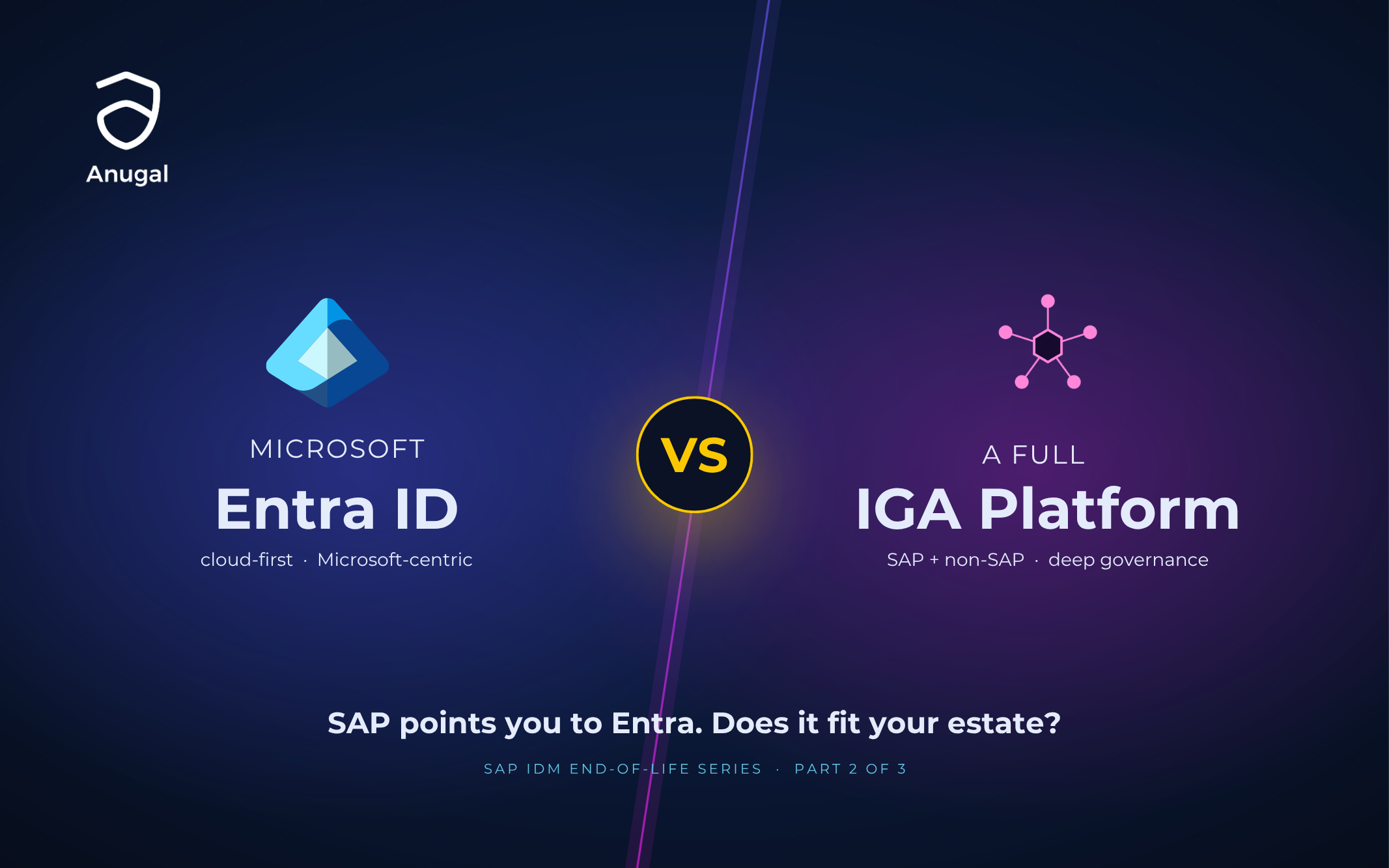
SAP retired SAP IDM without building a successor. Instead, it pointed customers to a partner: Microsoft Entra ID. That answer is right for some estates and wrong for others, and the expensive mistake is assuming which one you are before checking.
Here is the honest comparison: where Entra wins, where it runs thin, and a checklist that gives you a defensible answer in one meeting. The deadline math behind all of it sits in Part 1.
THE SHORT ANSWER
SAP recommends Microsoft Entra ID as the path after SAP IDM. A joint migration collaboration and a preview integration between Entra ID Governance and SAP Cloud Identity Access Governance back that direction. Entra fits Microsoft-centric, cloud-first estates. A full IGA platform fits mixed SAP and non-SAP estates needing deep provisioning, custom workflows, and fine-grained segregation of duties.
What SAP actually recommends
SAP names no successor product for SAP IDM 8. At DSAG Technology Days 2024, SAP pointed to Microsoft Entra as the strategic direction, and the two companies announced a migration collaboration in February 2024. Microsoft has since published step-by-step guidance for moving IDM scenarios to Entra.
SAP keeps investing in its own SAP Cloud Identity Services and SAP Cloud Identity Access Governance (IAG) for the SAP ecosystem. The newest piece sits in Microsoft's documentation as a preview: Entra ID Governance now integrates with SAP IAG, so SAP business roles appear inside Entra access packages and approvals in Entra drive role assignments in SAP.
Note what SAP did not say. Analyst firm KuppingerCole cautions the announcement gets misread as a finished combined product; SAP Cloud Identity Services is an integration layer for SAP applications, not a central IGA for your whole estate. And because every SAP IDM implementation is custom, no recommendation replaces a fit assessment.
SAP's recommendation is a direction, not a fit assessment; the fit assessment is yours to run.
The comparison at a glance
| Question | Microsoft Entra (with Entra ID Governance) | Full IGA platform |
|---|---|---|
| Best-fit estate | Microsoft-centric, cloud-first | Mixed SAP and non-SAP, hybrid, on-premise |
| Sign-in, MFA, conditional access | Excellent; core strength | Relies on your identity provider, often Entra |
| Cloud app provisioning | Strong via SCIM and gallery connectors | Strong via connector libraries |
| Deep SAP provisioning (ABAP roles, S/4HANA, GRC scope) | Through SAP Cloud Identity Services and the IAG preview integration | Native adaptors with direct role assignment |
| Fine-grained segregation of duties | Points to SAP IAG and partner products | Runs in the provisioning core |
| Custom joiner-mover-leaver logic | Lifecycle workflows plus Logic Apps extensions | Workflow studios built for complex logic |
| On-premise and legacy apps | Thinner; agent-based coverage | Broad, including API-less apps |
| Data sovereignty and deployment choice | Microsoft cloud | Varies by vendor; cloud, private, and hybrid options exist |
Neither column is wrong; they answer different questions.
Where Entra genuinely wins
An honest comparison names where the other option wins, so here it is.
If your estate lives in Microsoft's cloud, Entra is the obvious first candidate, not the compromise. You likely own much of the licensing already. Your team knows the admin center. Sign-in, MFA, and conditional access are Entra's home ground, and cloud app provisioning through SCIM is mature. Microsoft's SAP guidance now covers HR-driven provisioning from SuccessFactors through Entra into SAP targets.
For a cloud-first company with light SAP customization and few legacy apps, choosing Entra is defensible in one meeting.
For a Microsoft-centric, cloud-first estate, Entra is the natural starting point. Where governance runs thin across SAP roles, SoD, user access certification, master data migration, and audit evidence, Anugal extends governance beside Entra.
Where Entra runs thin for SAP estates
Now the other half. Each item traces to a question in the checklist below.
- Non-SAP and on-premise depth. Real estates carry legacy and custom applications with no clean API. Coverage thins here, and agents close only part of the gap.
- Deep SAP provisioning. Assigning SAP roles, running ECC and S/4HANA side by side, and honoring GRC scope routes through SAP Cloud Identity Services and the IAG integration, which Microsoft labels a preview today.
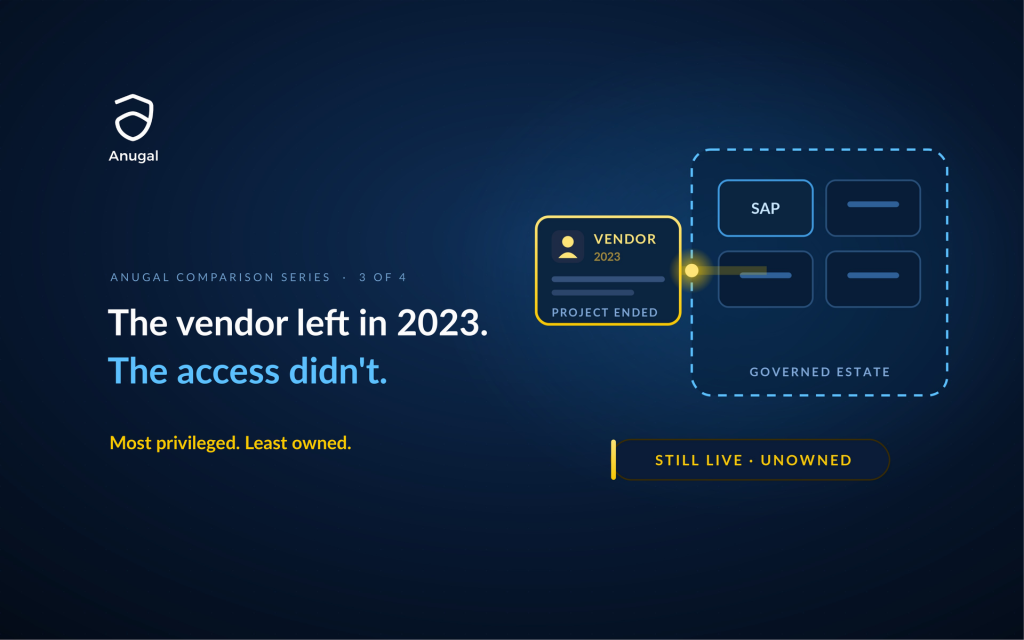
- Governance depth: segregation of duties and user access certification. Microsoft's own documentation points customers to SAP IAG and partner products for risk checks and fine-grained SoD. User access certification follows the same pattern: reviews exist in Entra ID Governance, and the role-level, risk-aware recertification SAP estates certify against still leans on IAG or partner tooling. If your SOX evidence depends on request-time SoD and defensible recertification, that dependency becomes your architecture.
- A decade of custom workflows. SAP IDM ships no standard functionality, so every implementation is custom. Rebuilding ten years of joiner-mover-leaver logic in lifecycle workflows plus Logic Apps is a project, not a toggle.
- Data sovereignty and deployment. If regulators or contracts demand deployment choice, a single-cloud answer needs early legal review.
Entra decides who signs in everywhere; the harder question is who gets what inside SAP, and that is where estates differ.
Coexistence: the part everyone misses
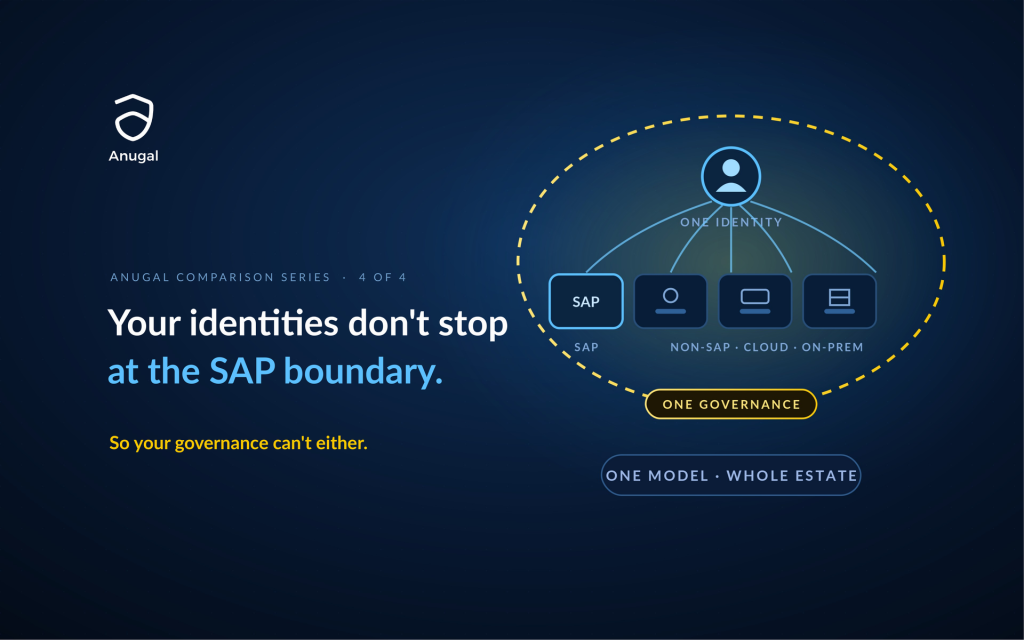
This choice is not a divorce from Microsoft. In practice, the strongest architectures run both: Entra as the identity provider for sign-in, MFA, and conditional access, and a governance layer for provisioning depth, custom workflows, and segregation of duties.
Coexistence also de-risks the migration itself. Entra keeps authenticating users while governance moves off SAP IDM system by system, so no cutover weekend bets the company.
This is not Entra or governance; the strongest pattern is Entra and a governance layer, together.
The Entra-or-IGA Decision Checklist
Answer ten questions honestly and the category picks itself.
THE ENTRA-OR-IGA DECISION CHECKLIST
- Do more than a quarter of your applications sit outside the Microsoft cloud?
- Do on-premise or legacy applications still need automated provisioning?
- Does any application in scope lack a usable API?
- Do auditors expect segregation-of-duties checks at request time, before access lands?
- Do you assign SAP roles or run ECC and S/4HANA side by side?
- Have you built custom joiner-mover-leaver logic beyond standard templates?
- Do data sovereignty or deployment rules limit a single-cloud answer?
- Will SAP GRC or IAG remain in your architecture after the migration?
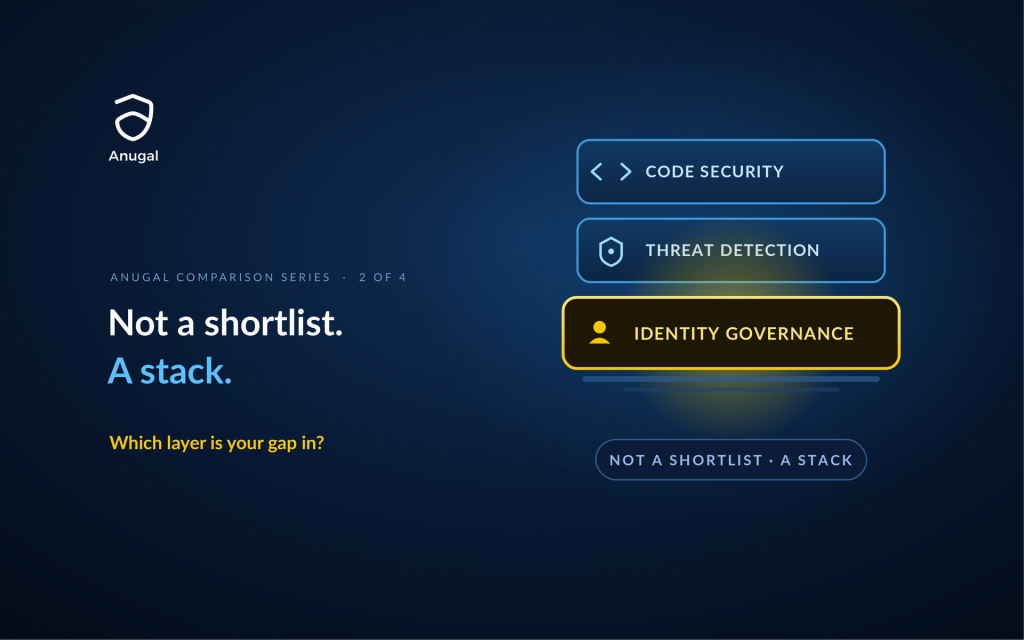
- Do third parties, contractors, or machine identities need governed access?
- Is your first post-migration audit less than 24 months away?
Score it: mostly no, shortlist Entra first. Three or more yes answers across questions 1 to 9, shortlist a full IGA platform. Either way, write the answers down; the document is your defense when someone asks why.
Mistakes that turn this choice expensive
- Reading the SAP announcement as a fit assessment. It is a direction. Your estate decides the fit.
- Comparing license prices instead of program prices. Owned licensing looks free until services, extensions, and rebuilt workflows join the math.
- Rebuilding IDM customizations as-is. Either destination punishes a like-for-like copy of decade-old logic.
- Deciding before inventorying the non-SAP estate. The apps nobody lists are the apps that break the plan in month nine.
Frequently asked questions
Is Microsoft Entra the official SAP IDM successor?
There is no successor product. SAP recommends Microsoft Entra as the strategic direction and works with Microsoft on migration guidance, while continuing SAP Cloud Identity Services and IAG for the SAP ecosystem. The recommendation is real; whether it fits your estate is a separate question.
Does Entra ID replace SAP IDM completely?
For Microsoft-centric, cloud-first estates, it often does. For mixed estates, gaps appear in on-premise coverage, deep SAP role management, custom workflows, and fine-grained segregation of duties, where Microsoft's own documentation points to SAP IAG and partner products. Run the checklist before deciding.
What is the Entra and SAP IAG integration?
A preview capability in Microsoft Entra ID Governance: SAP business roles from SAP Cloud Identity Access Governance appear as resources in Entra access packages, so approvals in Entra drive role assignments in SAP. It requires Entra ID Governance or Entra Suite licensing and a configured SAP Cloud Identity Services setup.
Do Entra and an IGA platform work together?
Yes, and the pairing is common: Entra handles sign-in, MFA, and conditional access as the identity provider, while the IGA platform handles provisioning depth, custom workflows, and segregation of duties across SAP and non-SAP systems. Coexistence also lowers migration risk during the SAP IDM exit.
Why Anugal fits
You ran the checklist. If three or more answers came back yes, you need the fourth category: a full IGA platform with real SAP depth. Here is why Anugal fits that profile, point by point.
WHY ANUGAL FITS THE FULL-IGA PROFILE
- SAP depth without translation layers. Bi-directional adaptors for SAP ECC, S/4HANA, SuccessFactors, BTP, and SAP GRC handle role assignment directly.
- SoD where auditors want it. Segregation-of-duties checks run at request time, in the provisioning core, with evidence generated as a by-product.
- The long tail covered. Pre-built connectors span the non-SAP estate, and RPA-based automation reaches legacy applications with no API.
- Entra stays. Anugal plugs into Entra as your identity provider; sign-in and MFA stay where your users already live.
- Proof at scale. A leading agro-industry enterprise manages 5,000+ identities across 40+ applications via Anugal.
The verdict in one line: Anugal covers the checklist items where Entra runs thin, and it runs beside Entra, not against it.
And the admission you should expect from any honest vendor: if the checklist came back mostly no, take Entra and move on. We would rather you choose right than choose us.
SEE THE TWO SIDE BY SIDE
Bring your checklist answers and we will map both options onto your estate in a 30-minute comparison demo. No slideware, your systems.
Write to hello@businesscoresolutions.com
Not ready to talk? Take the SAP IDM Readiness Assessment or await Part 3: How to Migrate off SAP IDM.
Frequently Asked Questions
What is privilege drift in complex role models?
Privilege drift is the gradual divergence between the access a user should hold and the access they effectively hold, driven by structural weaknesses in role models such as Cartesian role multiplication, inheritance opacity, exception-to-permanence drift, and integration-edge inconsistency.
How is privilege drift different from privilege creep?
Privilege creep describes an individual user accumulating permissions over time. Privilege drift describes the structural divergence between intended and effective access across the role model itself. Privilege creep is the symptom and privilege drift is the cause.
Why does privilege drift cause audit findings?
Privilege drift produces stale entitlements, segregation of duties violations, orphaned accounts, and undocumented exceptions. These map directly to audit findings under NIST SP 800-53 AC-6, SOX Section 404, SOC 2, ISO 27001, and HIPAA access control requirements.
How do you detect privilege drift in a complex environment?
Detection requires continuous access intelligence, peer-baseline outlier comparison, and usage-aware analysis across all governed applications. Point-in-time certification cycles cannot detect drift because the access landscape changes between reviews.
How does Anugal contain privilege drift continuously?
Anugal applies real-time access intelligence, AI-powered role mining, segregation of duties enforcement, and usage-aware certification across hybrid environments including long-tail applications, and reports 70 to 80% lower manual certification effort and 50 to 70% fewer audit findings on access reviews.