

Anugal · AI Agent Identity Governance Series
Runtime Authorization for AI Agents: Check the Action, Not Just the Login
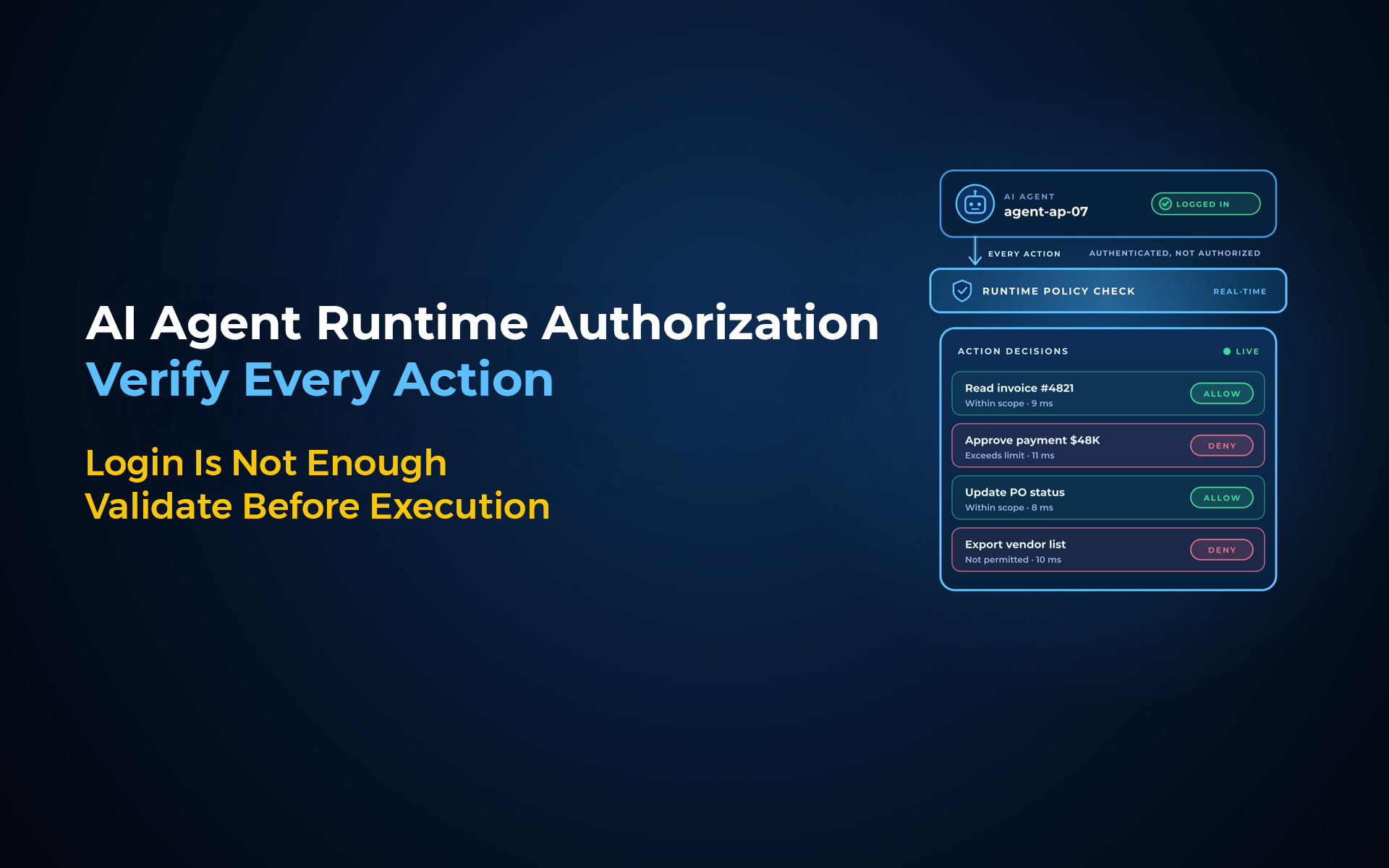
Authentication answers who connected. It does not answer whether every action that follows should be allowed. That difference matters for AI agents because they can make many decisions after the initial login, often faster than a human reviewer can intervene.
Consider an agent that authenticates correctly at 9:00. At 9:01 it reads approved data. At 9:03 it attempts a write action. At 9:05 it requests a privileged operation because the workflow changed. Treating all three actions as equally authorized because the login succeeded is too coarse.
Runtime authorization evaluates the action in context. The policy can consider the agent's identity, owner, purpose, requested resource, permission type, environment, risk signals and time window. Low-risk actions may proceed automatically. Higher-risk actions can require step-up approval, narrower access or denial.
Continuous evaluation also helps when context changes during a long-running task. An entitlement may be revoked, a credential may be suspected of compromise, the owner may suspend the agent, or the requested action may no longer match the original goal. Runtime checks provide a place to enforce those changes immediately.
What to check before each sensitive action
This is the zero trust idea applied to agents. NIST SP 800-207 grants access to each enterprise resource per session; for an agent that can change course mid-task, the same check belongs in front of every sensitive action. Before it runs, confirm five things:
-
1
What is it trying to do?
Identify the exact action the agent wants to take now.
-
2
Who is acting, and for whom?
Confirm the unique agent identity and its sponsoring authority.
-
3
Does it match the task?
Match the action to the approved business purpose or task.
-
4
Is the risk acceptable now?
Check current risk, data sensitivity, anomalies and policy conditions.
-
5
Is the authority still valid?
Confirm the access window, credential freshness and whether the task is still live.
Where Anugal fits
Anugal's governance model can provide the identity, ownership, entitlement and policy context needed to orchestrate controlled actions and preserve explainable evidence. For agentic workflows, the objective is to keep automation fast while ensuring sensitive actions remain subject to current governance decisions.
Where to start
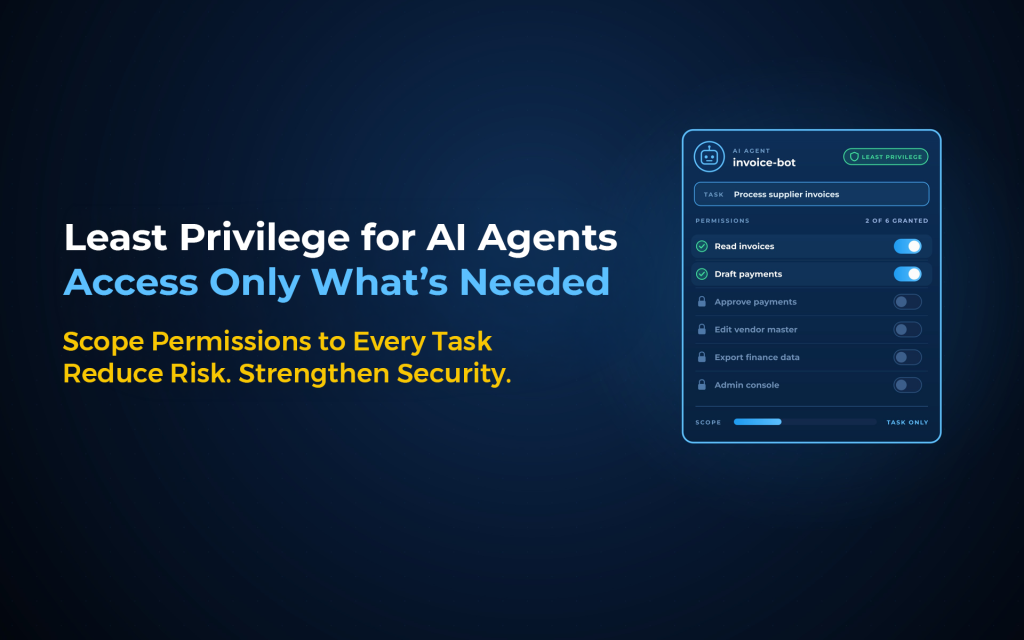
- Identify workflows where agents can move from read to write or privileged actions.
- Insert authorization checks before sensitive tool calls, not only at session start.
- Use purpose and current risk as part of the policy decision.
- Require step-up approval when the requested action exceeds normal scope.
- Log both the action and the policy decision that allowed or blocked it.
Key takeaway
Re-check sensitive actions as they happen. A successful login should not become blanket approval for every later tool call.
Govern every sensitive agent action
See how Anugal brings identity, ownership, entitlement and policy context to the AI agent actions that need a current governance decision.