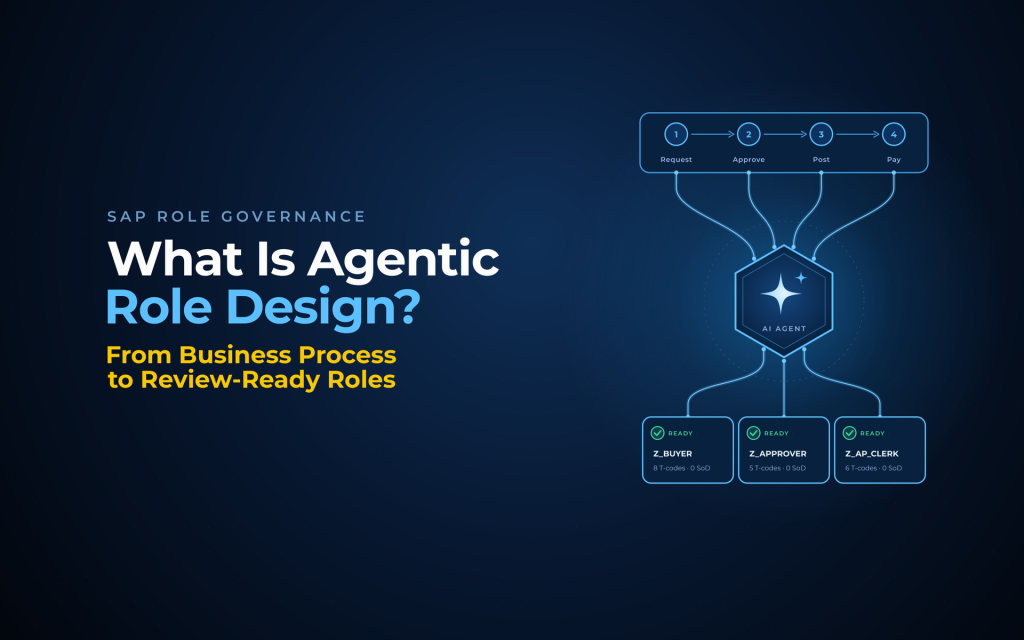


What Are HR Triggers in Identity and Access Management?
One HR update can change what a person should access. If identity systems do not react, yesterday's access can survive today's job change.
That gap is the reason HR triggers matter in identity and access management.
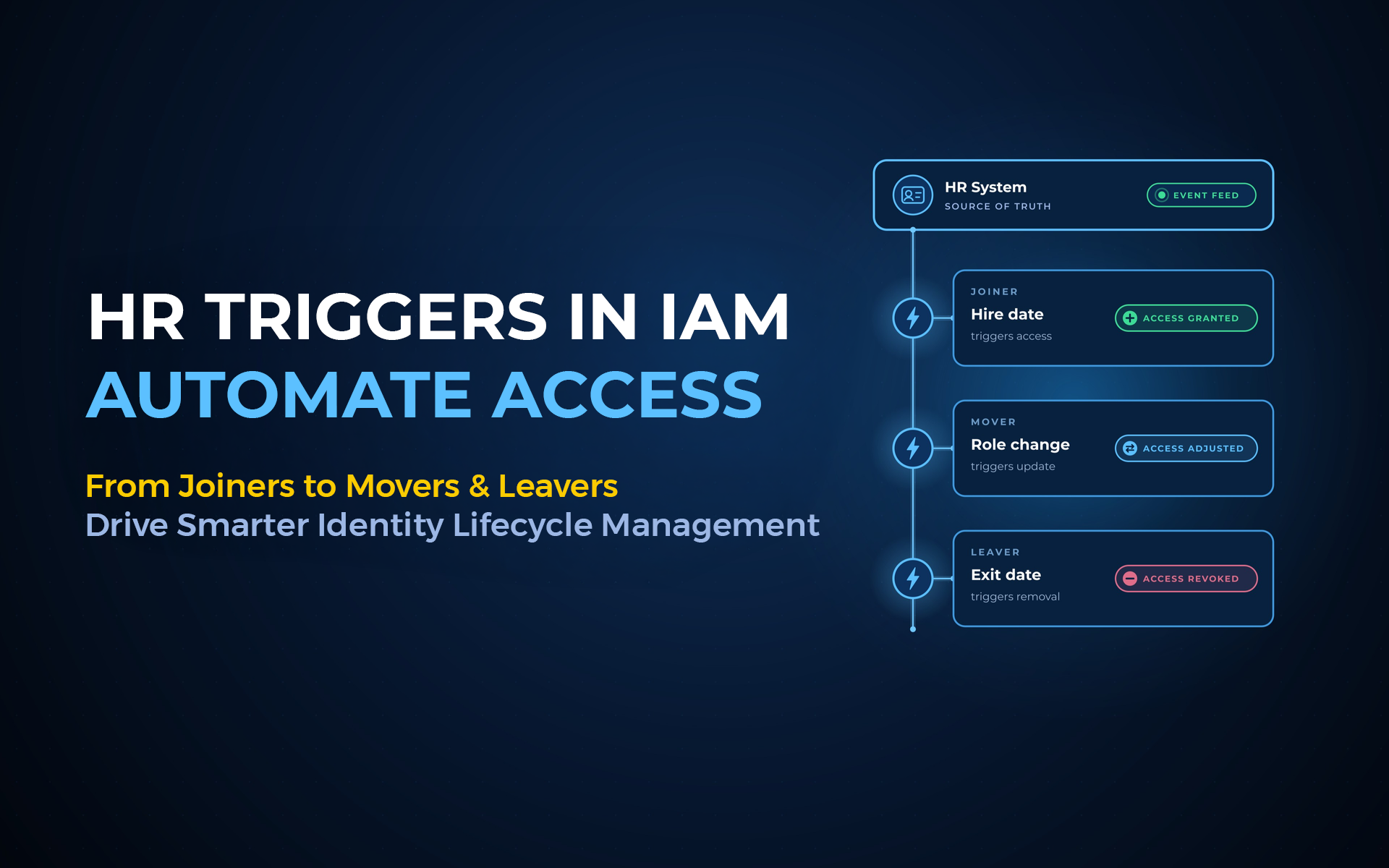
HR triggers in identity and access management are workforce events that start an identity workflow. A new hire, role change, location move, contract change or exit can prompt the IAM process to create, recalculate or revoke access. The goal is simple: keep access aligned with the person's current employment context and record every change.
Why 3 HR events create most lifecycle decisions
Joiner, mover and leaver events give you three clear moments to check whether access still matches the person.
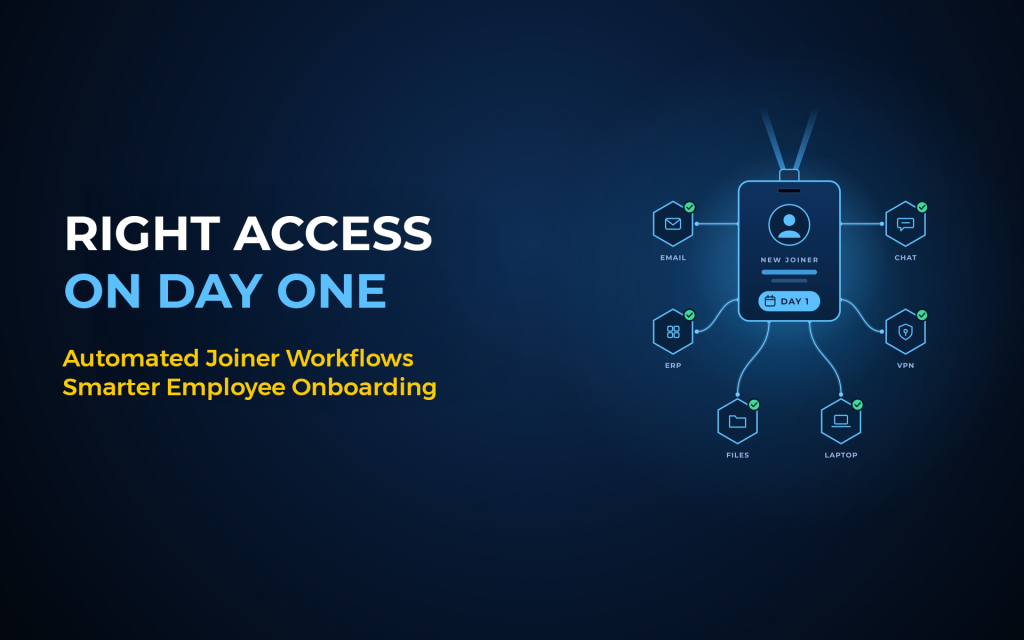
Picture Asha, a finance analyst. HR creates her record on Friday. On Monday, she joins the company. Six months later, she moves to procurement. A year later, she leaves. Her identity changed three times, but her access may touch dozens of systems.
Without an HR-driven flow, each change can become a ticket, an email or a spreadsheet row. That creates a timing problem. HR knows the workforce change first, while access teams learn about it later.
What should happen after 1 HR update?
A good HR trigger does not grant access by itself. It starts a governed decision.
The difference matters. You do not want every data change to create access blindly. You want the event to start a sequence that checks role, policy, approvals and the required action.
A simple flow looks like this:
- HR records the workforce event.
- The identity process reads the new employment context.
- Policy and role logic decide what to create, keep, change or remove.
- The target systems receive the approved access action.
- The system records the result for review and audit.
Why this matters across 4 priority regions
The common trend across Australia, India, Europe and the United States is stronger control over who has access, why they have it and when it should change.
In Australia, the Office of the Australian Information Commissioner maintains 13 Australian Privacy Principles, including security and data quality obligations. Its APP guidance was updated again in May 2026.
India moved into a new implementation phase when the Digital Personal Data Protection Rules, 2025 were notified on 14 November 2025.
In Europe, Commission Implementing Regulation (EU) 2024/2690 requires covered entities to provide, modify, remove and document access rights, and to change them when employment ends or changes.
In the United States, CISA's Zero Trust Maturity Model describes a progression from manually configured lifecycles toward automated, trigger-driven identity lifecycles and dynamic least privilege.
These rules and models differ. They do not create one global JML law. They do point in the same operational direction: identity data, access decisions and employment reality should not drift apart.
The 4-step HR-to-Access Loop
Use the HR-to-Access Loop to test whether your lifecycle process closes the gap from workforce change to evidence.
The four steps are easy to remember:
- Trigger: capture the join, move or leave event from the authoritative source.
- Decide: evaluate role, policy, approvals and least-privilege need.
- Act: create, change or revoke access in the connected systems.
- Record: log what changed, why it changed and which event caused it.
When employment context changes, access context should change with it.
4 mistakes that weaken HR-triggered identity workflows
Automation fails when you automate speed but leave access correctness to manual clean-up.
- Treating HR data as a notification instead of a lifecycle trigger.
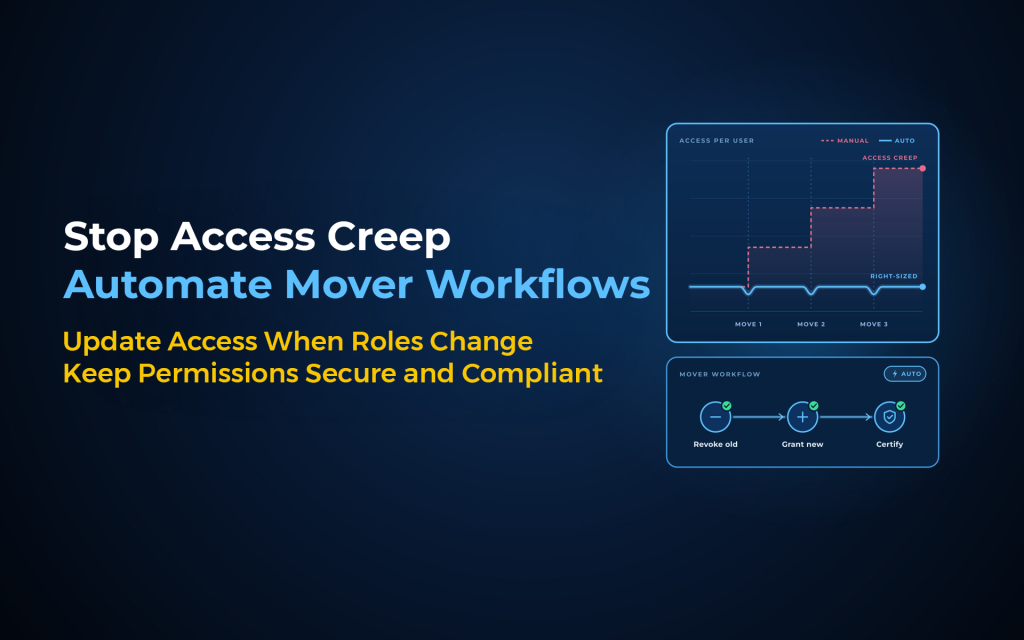
- Adding new access for movers without removing old access.
- Disabling one central account while leaving application or privileged access active.
- Logging the request but not the final execution result.
Where Anugal fits
Anugal connects HR-driven joiner, mover and leaver events with governed identity actions. The workflow evaluates the workforce context and policy before access is created, changed or revoked, and records the lifecycle action.
That keeps the process practical: start with the workforce event, define the access decision, send the approved change to the target system, and retain evidence of what happened.
Frequently asked questions
What is an HR trigger in IAM?
It is a workforce event recorded in an authoritative source that starts an identity or access workflow. Common triggers include hire, role change, location change and termination. The trigger should start policy evaluation before the system creates, changes or removes access.
Is a JML workflow the same as HR automation?
No. HR automation manages workforce processes. JML identity governance uses workforce events to decide what digital access should change. The two should connect, but they solve different problems.
Why are mover events risky?
Movers often receive access for the new role while keeping access from the old one. Over time, this creates access accumulation. A mover workflow should recalculate access and remove permissions that no longer match current responsibilities.
Does every HR data change need an access change?
No. A trigger should start an evaluation, not a blind grant or revoke action. Your role rules, policies, approvals and exceptions decide whether the workforce change requires an access action.
How does Anugal fit?
Anugal positions JML as a continuous identity lifecycle anchored to HR-driven workforce change. Its current product page describes event detection, governed access evaluation, create/modify/revoke actions and traceable lifecycle evidence.
Next step
See how Anugal approaches HR-driven identity lifecycle governance.
Prefer a direct conversation? hello@businesscoresolutions.com
Website: https://anugal.ai/