

Anugal · AI Agent Identity Governance Series
AI Agents Need Their Own Identity
An AI agent that acts through a shared account may be productive, but it is difficult to govern. When several agents use the same service credential, security teams lose the ability to answer a basic question: which agent performed the action, under whose authority, and for what purpose?
The identity problem becomes more serious as agents move from reading information to taking action. They may create tickets, update records, trigger workflows, call APIs, change configurations or request access to other systems. If those actions all appear under one technical account, traditional access reviews and audit trails become weak. The account exists, but the actual actor remains invisible.
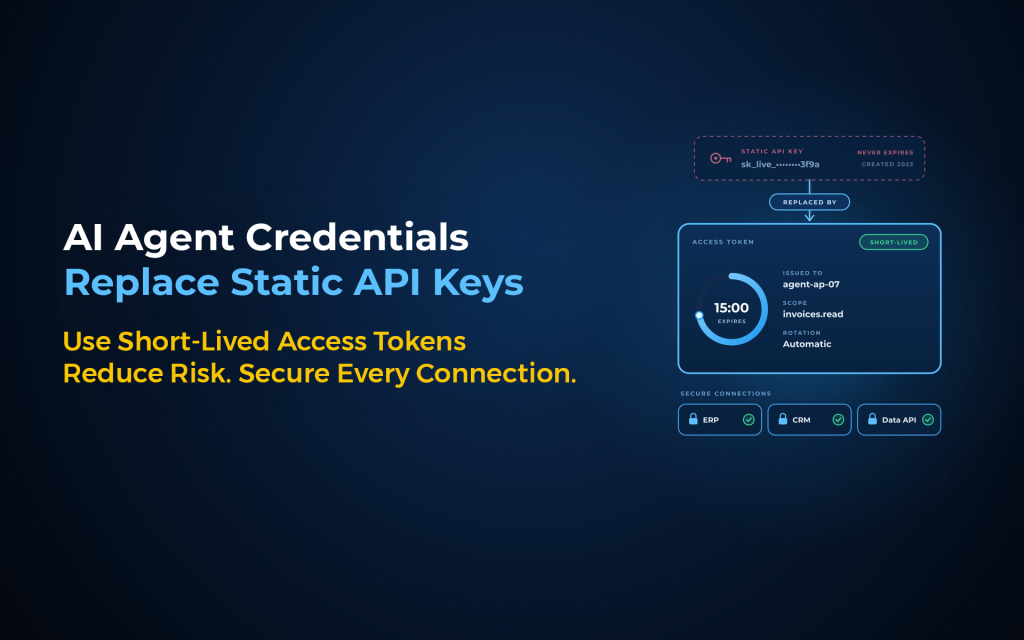
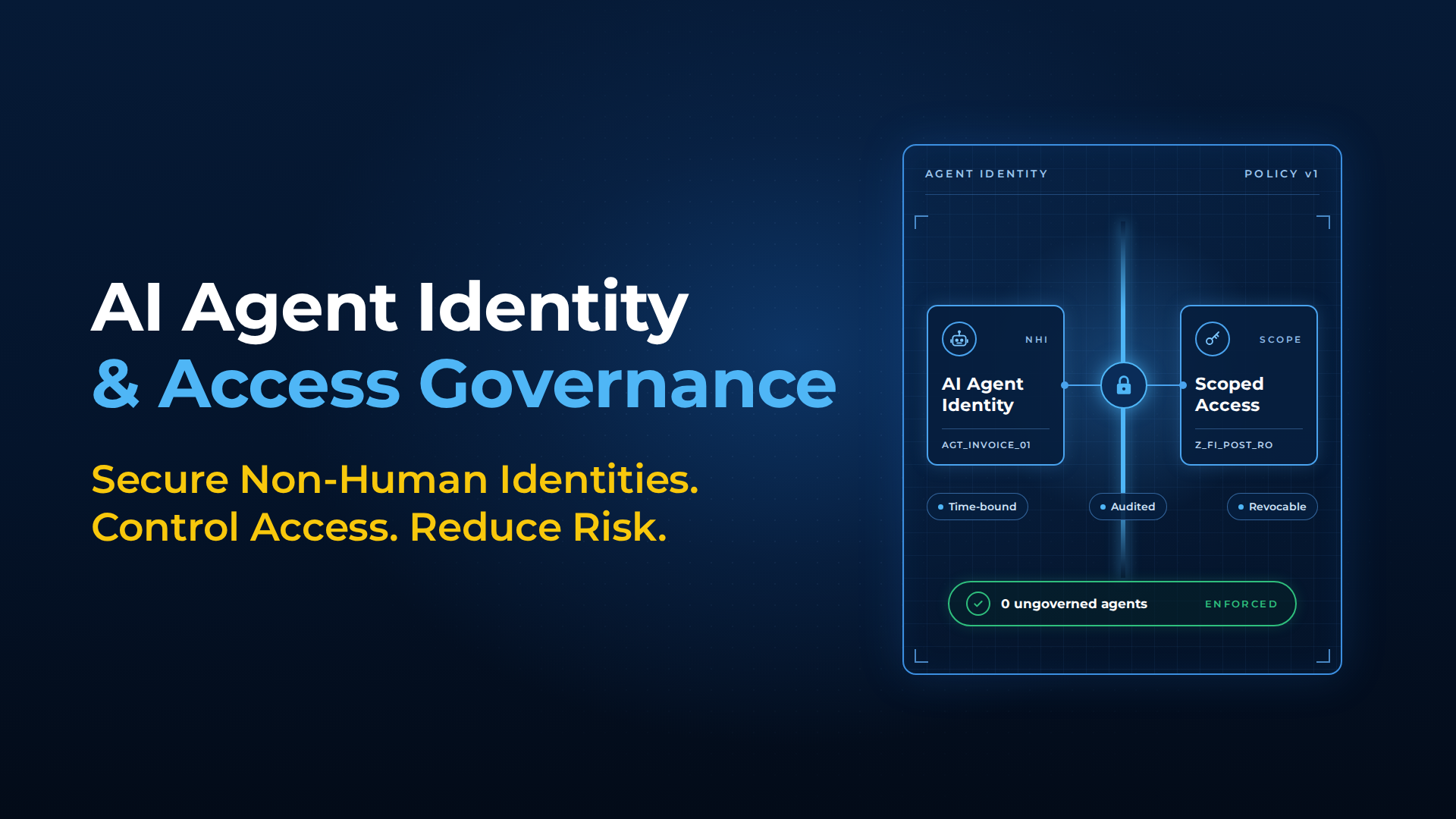
A stronger model treats the AI agent as a first-class non-human identity. The identity should have a stable record even if its runtime credentials are short-lived. That record links the agent to an accountable owner, a declared purpose, approved permissions, risk classification and lifecycle state. This separation matters because identity, credential and authority are not the same thing. The identity can remain stable while credentials expire frequently and permissions change by task.
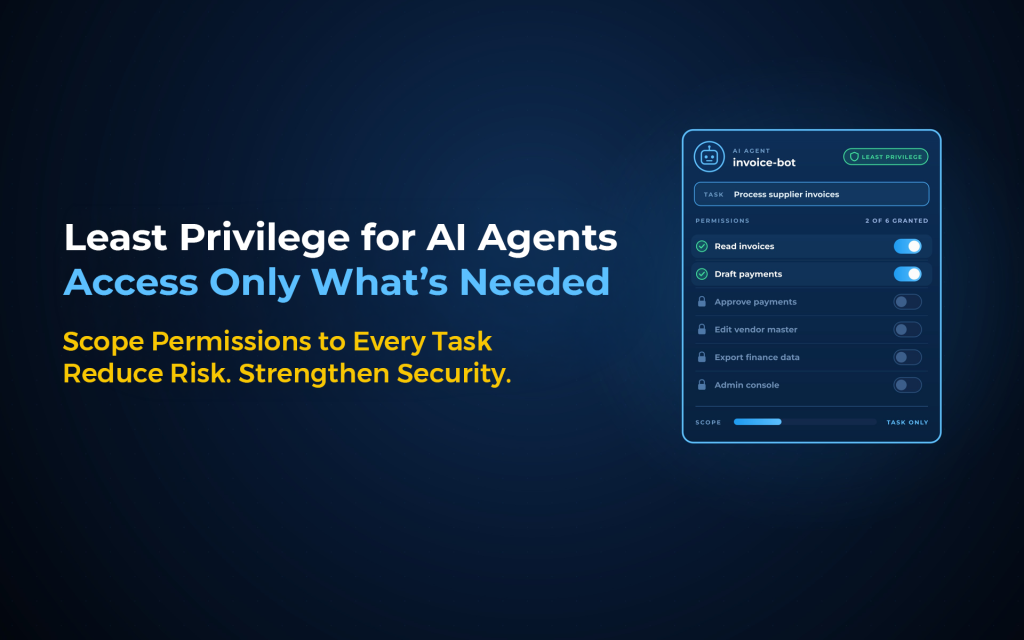
This model also improves least privilege. Instead of granting an agent the same access as the employee who launched it, the enterprise can approve only the actions the agent needs. If the agent is retired, compromised or no longer required, its access can be revoked directly without disrupting a human user or unrelated automation.
What every agent identity record should hold
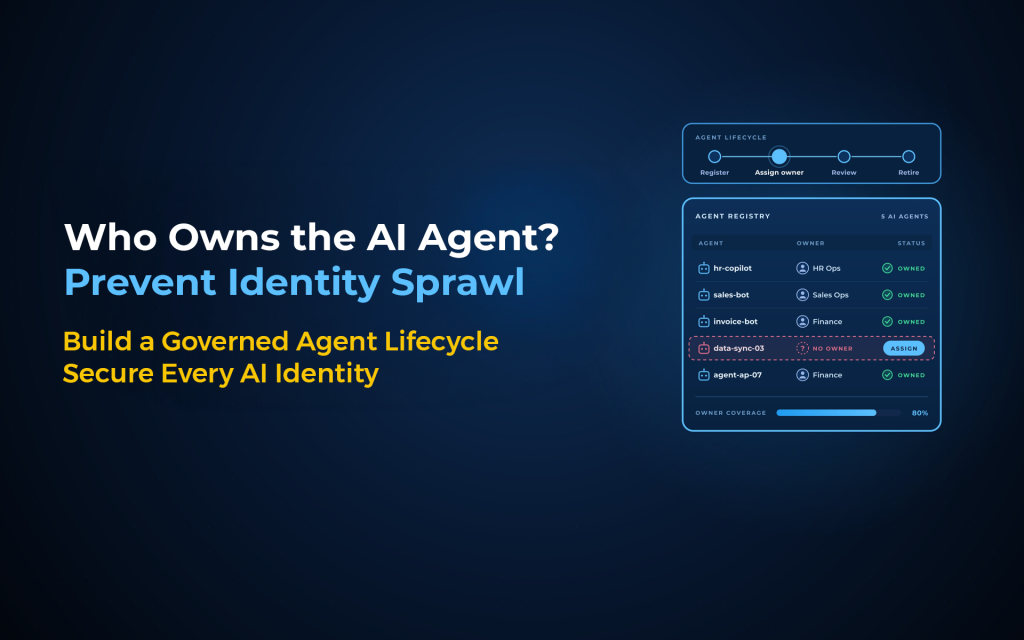
Treat each agent like any other identity in scope for governance. The OWASP Non-Human Identities Top 10 names improper offboarding as its first risk, and an agent cannot be offboarded cleanly if nobody recorded who owns it or why it exists. Each record should answer five questions:
-
1
Who owns it?Name the person or business owner accountable for the agent.
-
2
What is it for?Record the approved business purpose and the tasks the agent may perform.
-
3
What does it need?Grant only the applications, data and actions that purpose requires.
-
4
Can you tell it apart?Give the agent its own identity, not a shared service account or a person’s login.
-
5
When is it checked again?Set credential lifetime, review dates and the conditions that force re-approval.
Where Anugal fits
Anugal can bring AI agents and other non-human identities into the same governance discipline used for enterprise access: inventory, ownership, lifecycle controls, least privilege, reviews, revocation and audit evidence. The goal is not to make every decision autonomous. It is to ensure autonomous actors operate inside defined identity and policy boundaries.
Where to start
- Inventory the agents currently using shared service accounts.
- Create a unique governed identity record for each production agent.
- Link every agent to a named owner and approved purpose.
- Replace broad persistent access with scoped and time-bound authority.
- Review agent access whenever purpose, owner, environment or risk changes.
Key takeaway
Give every production AI agent a governed identity that is separate from the human, credential and task authority around it.
References
- NIST NCCoE - Software and AI Agent Identity and Authorization initiative (2026).
- NIST publications and stakeholder work on AI-agent identity, authorization, delegation and credential security.
- Current industry guidance on non-human identity, agent discovery, ownership and runtime authorization.
- OWASP Top 10 Non-Human Identities Risks 2025 (https://owasp.org/www-project-non-human-identities-top-10/2025/top-10-2025/)
See it with your own agents
Bring your AI agents under identity governance
See how Anugal brings AI agents and other non-human identities into the same governance you apply to enterprise access: ownership, least privilege, reviews, revocation and audit evidence.