

Anugal · AI Agent Identity Governance Series
AI Agent Delegation: Do Not Let Agents Impersonate Employees
An employee asks an AI agent to complete one task. The dangerous shortcut is to give the agent the employee's full session or credentials. That makes implementation easy, but it also turns a narrow request into broad delegated power.
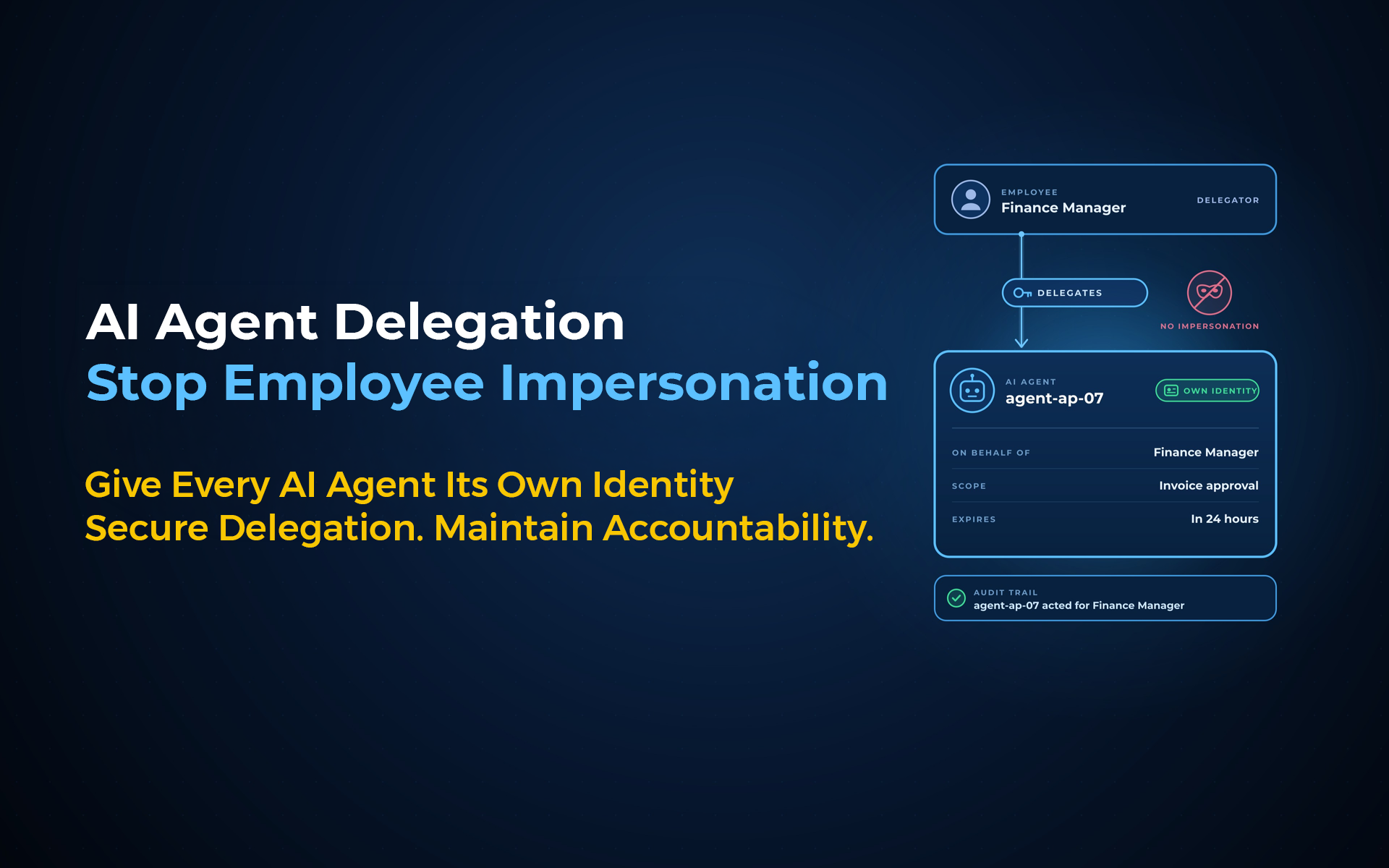
Impersonation hides the real actor. Logs may show the employee even when an autonomous agent chose the action, selected the target and executed it. It also creates excessive authority because the agent inherits every permission the employee has, not only the permission required for the task.
Delegation creates a cleaner control model. The user remains the sponsor, but the agent receives its own identity and a constrained authority grant. That grant should describe the task, target resource, allowed action, duration and policy conditions. If the agent later attempts something outside that envelope, the request can be denied or escalated.
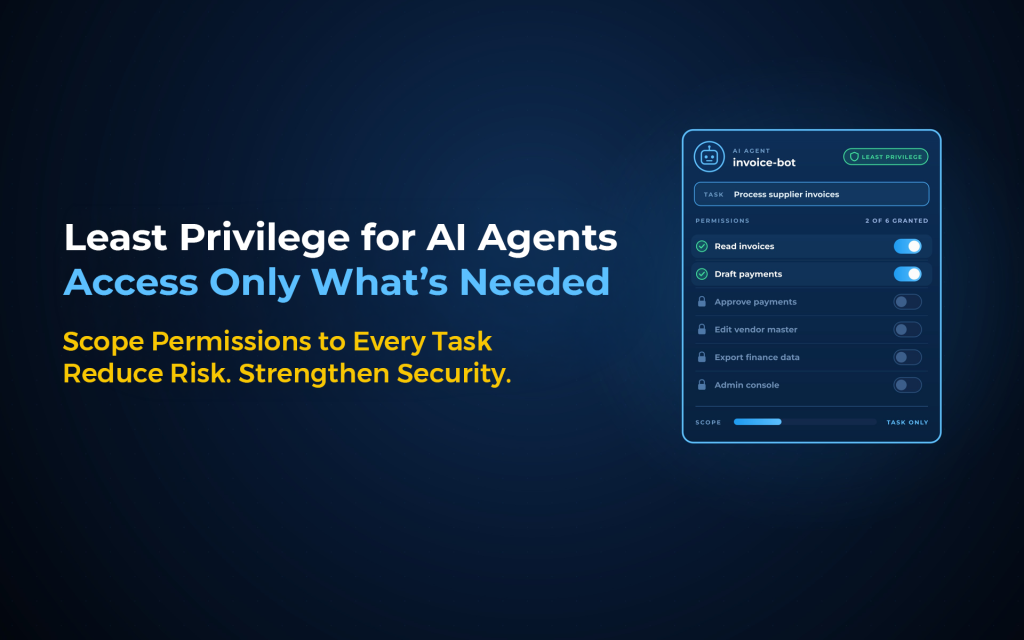
This is especially important for high-impact workflows. A travel assistant may read a calendar and create a booking request, but it should not automatically gain the user's finance, HR and administrative permissions. A support agent may update a ticket, but it does not need unrestricted access to every customer record. Delegation turns intent into bounded authority.
What a delegation grant must record
Delegation is already defined in identity standards. OAuth 2.0 Token Exchange (RFC 8693) separates the subject a token is about from the actor that has been given some of that subject’s rights, which is the split an agent needs. Whatever technology you use, each grant should answer six questions:
- 1
Who asked? Record the person, service or business process that started the task.
- 2
Which agent is acting? Use a unique agent identity, never the delegator’s own session or credentials, and log the chain from delegator to agent to action.
- 3
What exactly may it do? Name the action and the specific system, object or data set it applies to.
- 4
Under which conditions? Apply policy conditions, approval thresholds and risk controls.
- 5
For how long? Make the delegated authority time-bound.
- 6
What if it needs more? Require step-up approval when the task goes beyond the original scope.
Where Anugal fits
Anugal can help connect agent identities to sponsors, entitlements, approval paths and audit evidence so the enterprise can govern delegated access across SAP and non-SAP environments. The emphasis is controlled orchestration: the agent can act, but only within explicit policy and accountability boundaries.
Where to start
- Stop treating human credentials as a convenient agent runtime identity.
- Represent the agent and the delegator separately in logs and governance records.
- Translate every delegated task into action, resource, duration and policy conditions.
- Use escalation for requests that exceed the original task.
- Preserve the delegation chain as audit evidence.
Key takeaway
Give an agent the user's intent, not the user's entire identity.
Govern delegated agent access
See how Anugal connects agent identities to sponsors, entitlements, approval paths and audit evidence across SAP and non-SAP environments.