

Anugal · AI Agent Identity Governance Series
AI Agent Audit Trails: Prove Who Authorized What, and Why
A log line that says an API call succeeded is not enough to govern an autonomous agent. During an audit or incident, teams need to explain not only what happened, but why the action was allowed, who sponsored it, what authority the agent held and whether the result matched the approved task.
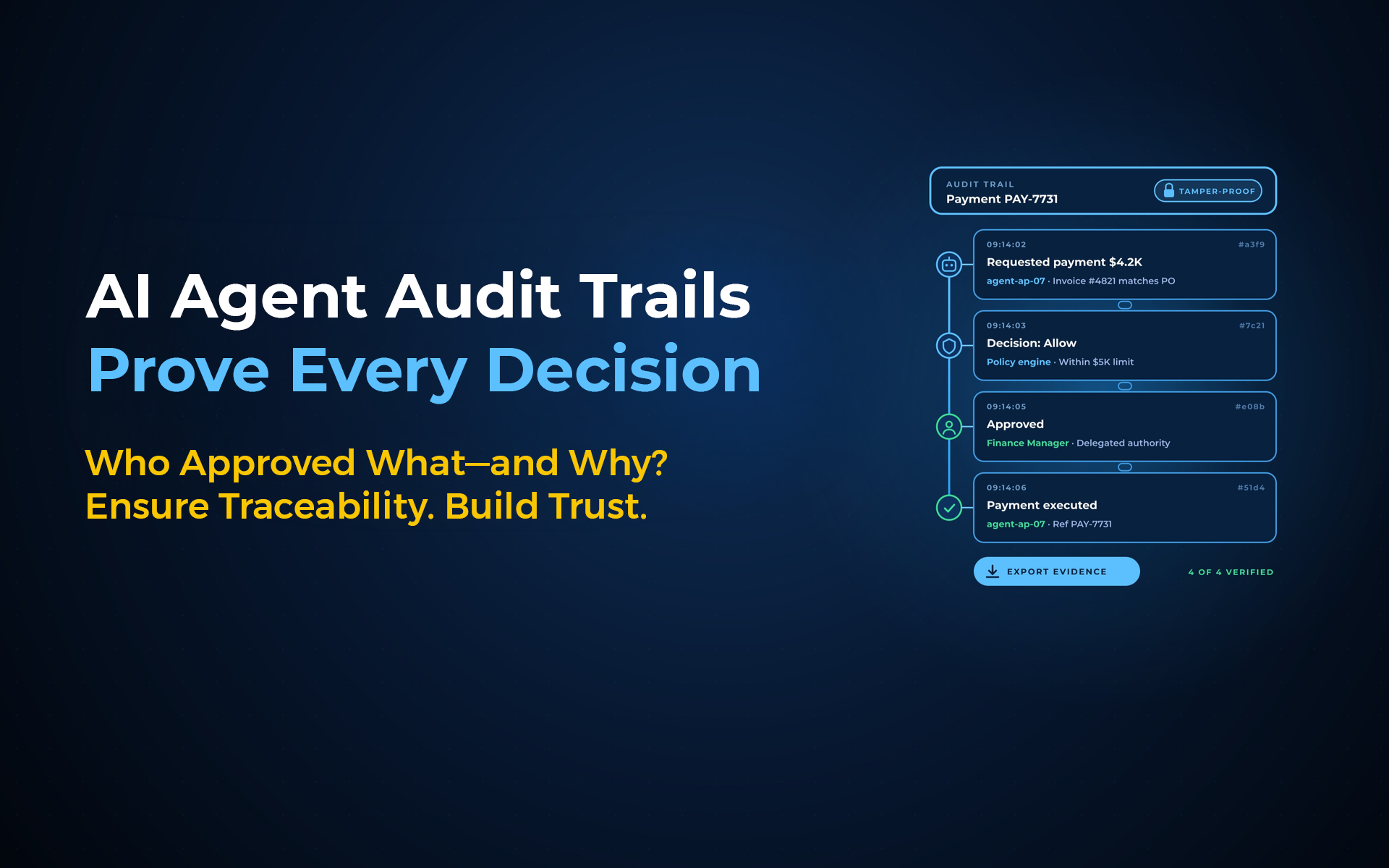
Traditional application logs focus on events. Agent governance needs an evidence chain. That chain begins with a unique agent identity and owner, continues through the delegated or assigned authority, records policy decisions at runtime, and ends with the business outcome. Without those links, investigators must reconstruct intent from scattered systems after the fact.
Good evidence should distinguish between the human sponsor, the agent, the credential and the target system. It should also preserve changes in authorization. If a privileged action required step-up approval, that decision belongs in the same trace. If the agent attempted an action that was denied, that matters too because it can reveal policy drift or abnormal behavior.
This evidence improves more than compliance. It helps security teams investigate incidents, product owners debug agent behavior and business owners understand how autonomous workflows reach decisions. Auditability becomes a design requirement, not a reporting feature added later.
What an agent audit record must show
An auditor reviewing an agent action asks the same five questions every time. Each record should answer them without anyone rebuilding the story from separate systems:
-
1
Who acted, and for whom?
Record the agent identity and the sponsoring person or process.
-
2
What was requested?
Capture the task or action, including the resource and the purpose.
-
3
What actually happened?
Record what the agent changed, created, read or ran.
-
4
Who or what allowed it?
Store approvals, policy decisions, exceptions and escalations.
-
5
Can the event be rebuilt?
Keep timestamps, credential context, the delegation chain and the evidence needed to reconstruct it.
Where Anugal fits
Anugal can support centralized identity governance records, ownership, approval workflows, reviews and audit evidence across human and non-human identities. For AI agents, this creates a stronger path to accountability because identity, authority and governance decisions can be tied to the actions they enable.
Where to start
- Make the agent identity visible in every sensitive transaction.
- Record the sponsor or delegator separately from the agent.
- Capture policy decisions, approvals and exceptions alongside action logs.
- Preserve enough context to reconstruct the full chain of authority.
- Test the audit trail with a real incident scenario before regulators or customers ask for it.
Key takeaway
Agent accountability requires a connected evidence chain from sponsor and identity to policy decision, action and outcome.
Connect every agent action to its authority
See how Anugal ties identity, ownership, approvals and audit evidence to the actions your AI agents take.