

Anugal · AI Agent Identity Governance Series
Who Owns the Agent? Build an AI Agent Identity Lifecycle Before Sprawl Wins
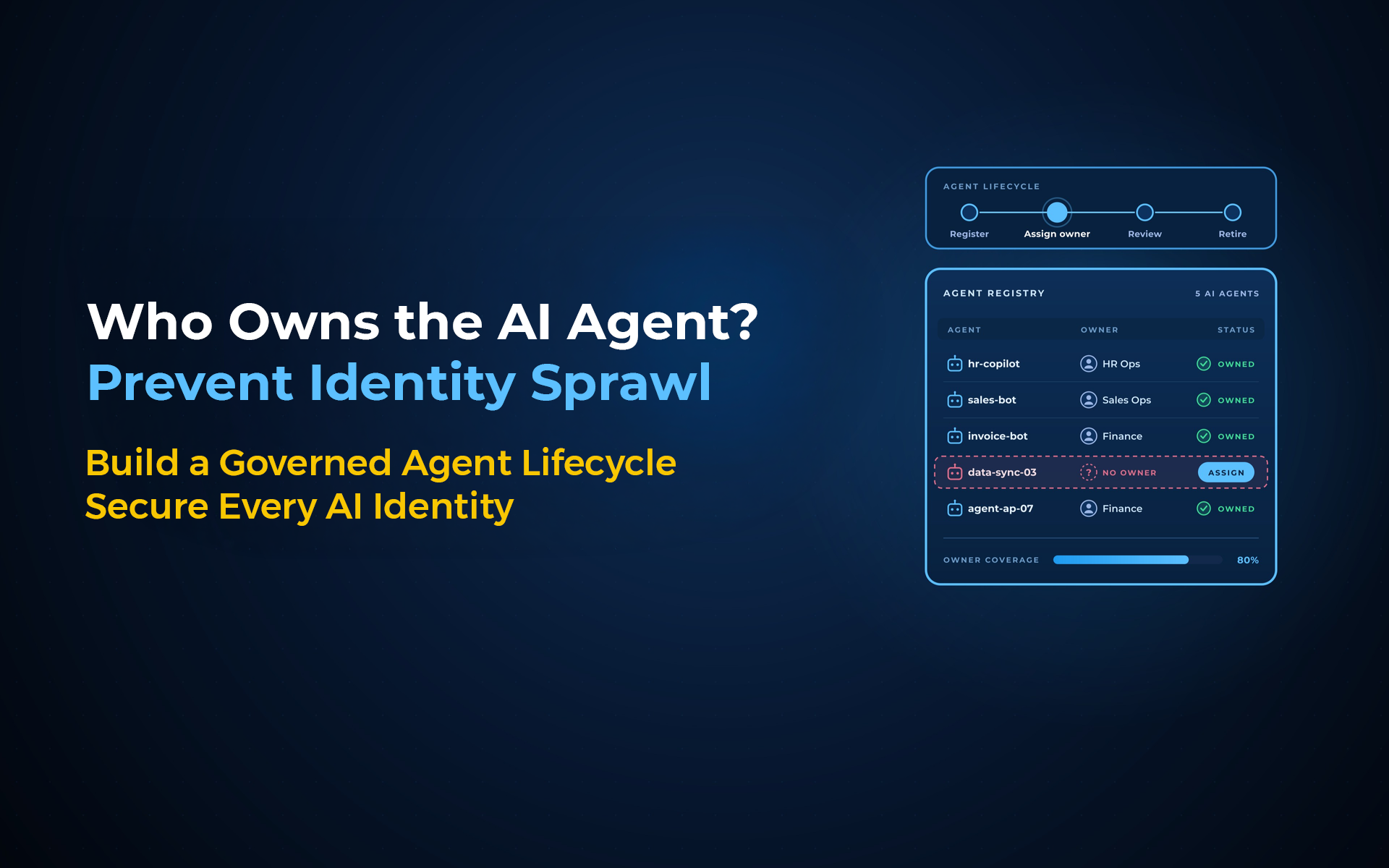
Most access problems become harder when nobody owns the identity. AI agents raise the same issue at larger scale. An agent may start as a pilot, move into production, gain new integrations, change teams and continue running long after the person who created it has moved on.
Ownership is more than a name in an inventory. The owner should be able to explain why the agent exists, what data it uses, which actions it may perform and when it should stop. Without that accountability, access reviews become rubber stamps because reviewers lack the context to judge whether permissions are still justified.
A lifecycle model should begin before deployment. Registration captures the sponsor, purpose, environment, sensitivity and initial entitlements. Changes to owner, purpose, model, toolset or connected systems should trigger re-evaluation. Periodic reviews then validate that access still matches business need.
Offboarding is the stage enterprises most often underestimate. Deleting the agent object is not enough. Teams also need to revoke tokens, disable credentials, remove service principals, end delegated grants, remove downstream permissions and preserve audit evidence. A retired agent should leave no silent authority behind.
What an agent lifecycle record needs
The OWASP Non-Human Identities Top 10 names improper offboarding as its first risk: identities and keys left active after they are no longer needed. For AI agents, clean offboarding depends on five things being recorded from the start:
-
1
Who owns it?
Assign a named, accountable business or technical owner.
-
2
Why does it exist?
Record the approved purpose and the expected business outcome.
-
3
What access does it need?
Record the applications, data and actions that purpose requires.
-
4
When is it reviewed?
Set review dates and the events that trigger re-assessment.
-
5
How is it retired?
Define how credentials, entitlements, sessions and downstream access are removed.
Where Anugal fits
Anugal can help bring machine and non-personal identities into explicit ownership, certification, lifecycle and revocation processes. This gives security and audit teams a repeatable control model from registration through retirement rather than relying on ad hoc cleanup.
Where to start
- Require an owner and purpose before an agent receives production access.
- Trigger review when owner, purpose, tools or connected systems change.
- Set recurring certification for high-risk agents.
- Define a retirement checklist that includes downstream tokens and delegated grants.
- Keep evidence showing who approved access and when it was removed.
Key takeaway
An agent without an accountable owner and retirement path is an access exception waiting to become permanent.
Bring every agent under an owner
See how Anugal assigns ownership, schedules certification and revokes access at retirement for the AI agents and non-personal identities in your estate.