


Vendor Access Management: Govern Third-Party Access
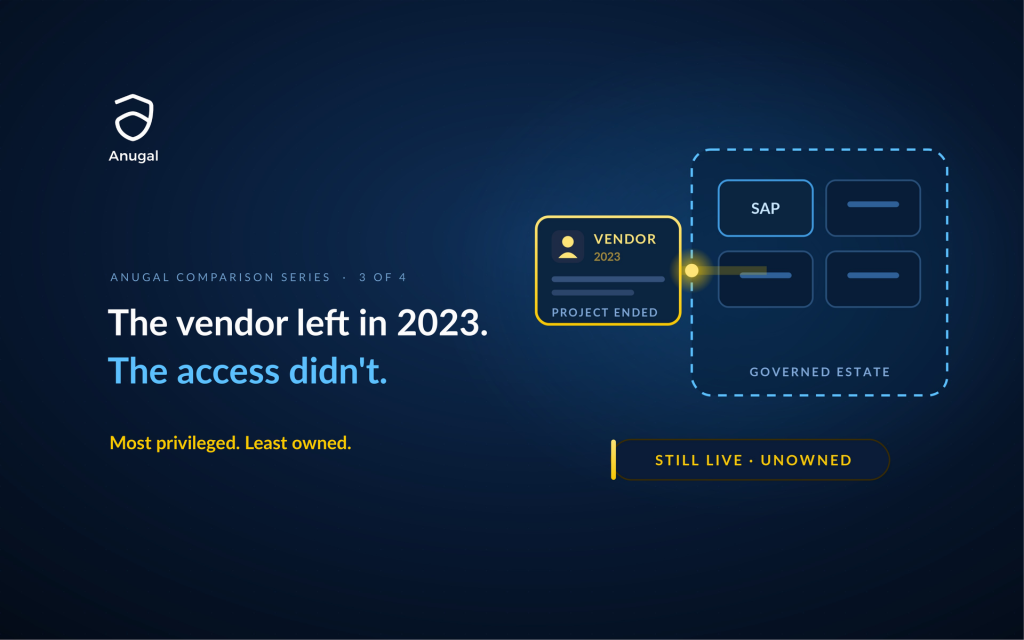
A contractor’s 90-day engagement ends on Friday. Their project work ends too. But what happens to their SAP role, VPN account, SaaS access, and other permissions on Monday?
Picture a contractor whose manager closes the contract on time while application owners still rely on emails, spreadsheets, and manual tickets to remove access.
The contract ends. The access does not.
Why does third-party access become difficult to govern?
Internal employees usually enter through a structured HR-driven process. A new employee has a start date, organisational role, manager, and formal employment record. When that employee changes teams or leaves, those events trigger identity lifecycle actions.
Vendors and contractors often follow a very different process.
A project manager emails IT about a contractor. Someone records the contractor in a spreadsheet. Another team raises an application ticket. A system owner approves access.
Months later, nobody can clearly explain which request created which entitlement or when that access should have been removed.
Common third-party access challenges include:
- Onboarding through emails, spreadsheets, or manual tickets with limited traceability.
- No automated offboarding when a contract ends.
- Limited visibility into what a vendor has access to and for how long.
- Compliance teams manually reconstructing access history during audits.
What is Vendor Access Management in Anugal?
Vendor Access Management is a dedicated capability within Anugal that extends Identity Governance and Administration to third-party identities such as vendors, contractors, consultants, and external partners.
Instead of managing external users through disconnected processes, Anugal brings them into a governed identity lifecycle while applying the additional controls that third-party relationships require.
Every external identity should answer four questions:
- Who is the accountable internal sponsor?
- Why does this person need access?
- What applications, roles, and entitlements are required?
- When should that access end?
Vendor Access Management gives external identities a governed lifecycle instead of treating them as exceptions outside the normal identity process.
What happens when contract dates and access dates drift apart?
A contract end date should create a clear access decision: renew the relationship under appropriate approval or remove the access.
When the commercial relationship and identity lifecycle are disconnected, access may remain active after the business need has disappeared.
| Event | Governance Consequence | Primary Owner |
|---|---|---|
| Vendor starts before approvals finish | Work is delayed or access may be granted outside the normal process. | Business Sponsor / IAM |
| Vendor changes project | Old access may remain while new access accumulates. | Business Sponsor / Application Owner |
| Contract ends | Accounts and entitlements may remain active. | Sponsor / IAM |
| Reviewer lacks ownership context | Certification decisions lose important business context. | Access Owner |
| Audit requests access history | Teams manually reconstruct requests, approvals, and changes. | IAM / Compliance |
The exposure is not limited to security. IT spends time chasing approvals. Application owners lose visibility. Compliance teams rebuild evidence manually. Business sponsors lose track of access when projects change.
Orchestrating the full JML lifecycle for vendors
At the heart of Vendor Access Management is Joiner, Mover, Leaver orchestration.
The same lifecycle model used for internal employees extends to vendors, contractors, consultants, and other external identities, with added context around contracts, sponsorship, project scope, and duration.
Joiner
Create the external identity, capture sponsor and contract information, assign the appropriate role, route approvals, and provision access through defined governance policies.
Mover
When project scope or responsibility changes, reassess current entitlements before adding new access.
Leaver
Connect contract expiry or early termination with the appropriate access removal workflow.
1. Joiner: Rapid, Governed Onboarding
A new contractor needs an identity before they need an entitlement.
The onboarding process should capture:
- Internal sponsor or accountable owner
- External company
- Contract or engagement period
- Required role
- Target applications
- Required approvals
- Access expiry conditions
Anugal initiates the workflow for identity creation, role assignment, access provisioning, and approval routing based on defined governance policies.
2. Mover: Dynamic Access Adjustments
Vendor relationships evolve. A contractor may change projects, move into a different scope of work, or take on additional responsibilities.
That change should trigger an access decision. New access should not simply be added while old access remains untouched.
Anugal helps align entitlements with the vendor’s current role and business need so access follows the engagement rather than accumulating around it.
3. Leaver: Time-Bound, Automatic Offboarding
Offboarding is where many third-party access processes struggle.
Anugal connects vendor lifecycle information with contract end dates so expiry initiates the appropriate access removal process.
When a relationship ends before the planned date, an early termination workflow supports the corresponding offboarding action.
Governance that actually works
Fast onboarding means little when governance disappears after access is provisioned.
Vendor Access Management needs controls across visibility, policy, reviews, evidence, and risk.
1. Real-Time Visibility
Maintain a central view of third-party identities, access entitlements, accountable owners, contract context, and lifecycle status.
2. Policy-Driven Access
Grant access according to governance policies and business context instead of relying on ad hoc decisions.
3. Access Certification Campaigns
Periodically confirm whether a vendor still requires each assigned role or entitlement as projects and responsibilities change.
4. Complete Audit Trails
Keep requests, approvals, changes, reviews, and revocations traceable without rebuilding evidence from email chains and spreadsheets.
5. Segregation of Duties Controls
Evaluate incompatible access combinations before provisioning so SoD conflicts are identified before access reaches the user.
Key benefits of Vendor Access Management
| Benefit | What It Means |
|---|---|
| Faster onboarding | Automated workflows reduce manual handoffs and approval chasing. |
| Reduced risk | Time-bound access and contract-linked offboarding reduce lingering access. |
| Operational efficiency | IT and security teams spend less time on repetitive lifecycle activities. |
| Audit readiness | Requests, approvals, changes, and revocations remain available for review. |
| Unified governance | Internal and external identities operate within one broader governance model. |
The Vendor Access Governance Checklist
Use these questions to assess whether your third-party identity process covers the full access lifecycle.
| Check | Question to Ask |
|---|---|
| Identity | Do you know exactly who the external user is? |
| Sponsor | Does one accountable internal owner sponsor the identity? |
| Purpose | Does the request explain why the vendor needs access? |
| Duration | Does the identity have a defined start and end date? |
| Access Scope | Does the vendor receive only the required roles and entitlements? |
| SoD | Does risk analysis run before provisioning? |
| Change Control | Does a project or role change trigger an access review? |
| Certification | Does someone periodically confirm continued need? |
| Offboarding | Does contract expiry initiate access removal? |
| Evidence | Can you trace each request, approval, change, review, and removal? |
Common mistakes that keep vendor access risky
1. Treating Vendors Exactly Like Employees
Employees and vendors both need identity governance, but their lifecycle triggers are different. Vendor access needs sponsorship, project context, contract duration, and expiry controls.
2. Treating the Contract End Date as Information Instead of an Event
Recording an expiry date is not enough. That date needs to trigger a review, renewal, or access removal action.
3. Adding New Access Without Reviewing Old Access
A project change should trigger more than additional provisioning. Existing access should also be reviewed so permissions do not accumulate.
4. Reviewing Vendor Access Without Business Context
An application owner understands the entitlement. The business sponsor understands why the vendor still needs it. Effective certification needs both contexts.
5. Keeping Vendor Governance Outside the IGA Process
Separate spreadsheets, email chains, and isolated workflows create separate evidence trails and inconsistent controls.
Third-party identities should operate within the broader identity governance model, with the additional controls required for external access.
Why Anugal fits
Anugal extends its Identity Governance and Administration model to vendors, contractors, consultants, and other external identities rather than treating them as a disconnected access process.
Full JML Lifecycle
Joiner, Mover, and Leaver orchestration helps external access follow changes in the business relationship.
Contract-Aware Offboarding
Contract dates provide lifecycle context for expiry and termination workflows.
Policy-Driven Access
Governance policies and approval routing shape access decisions before provisioning.
Access Certification
Periodic reviews help sponsors and access owners confirm whether external users still require their assigned access.
Preventive Segregation of Duties
Risk analysis identifies incompatible access combinations before provisioning.
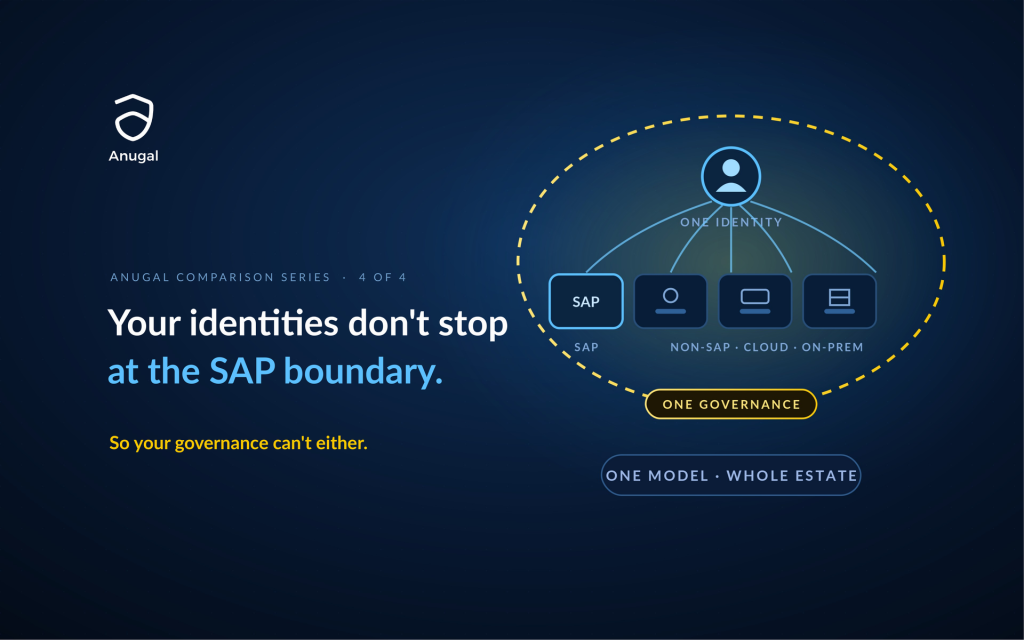
Unified Governance
Internal workforce identities and third-party identities operate within the same broader governance framework.
Frequently Asked Questions about Vendor Access Management
What is Vendor Access Management?
Vendor Access Management governs identities and access for vendors, contractors, consultants, and other external users. It connects onboarding, approvals, access changes, reviews, contract expiry, and offboarding.
How is vendor access different from employee access?
Vendor access requires stronger sponsorship, purpose, duration, project, and contract context.
What happens when a vendor contract expires?
The contract end date should trigger an identity governance action such as access removal or an approved renewal review.
Should vendors go through access certification?
Yes. Periodic certification helps confirm whether a vendor still needs each assigned role and entitlement.
Does Vendor Access Management include segregation-of-duties controls?
A governed vendor access process should evaluate segregation-of-duties risk before provisioning to prevent incompatible access combinations.
Built for the way modern organisations actually work
Modern organisations do not operate with a closed workforce. Vendors, contractors, consultants, and technology partners are part of everyday operations.
Identity governance needs to reflect that reality.
Vendor Access Management in Anugal helps govern external identities with lifecycle control, access reviews, policy enforcement, risk checks, and traceable evidence.
Because when it comes to access governance, there is no such thing as an identity that does not matter.
Ready to govern third-party access?
Bring vendor onboarding, access changes, reviews, contract expiry, and offboarding into one governed identity lifecycle.
Reach us at hello@businesscoresolutions.com