

The Joiner-Mover-Leaver Lifecycle Explained in One Simple Workflow
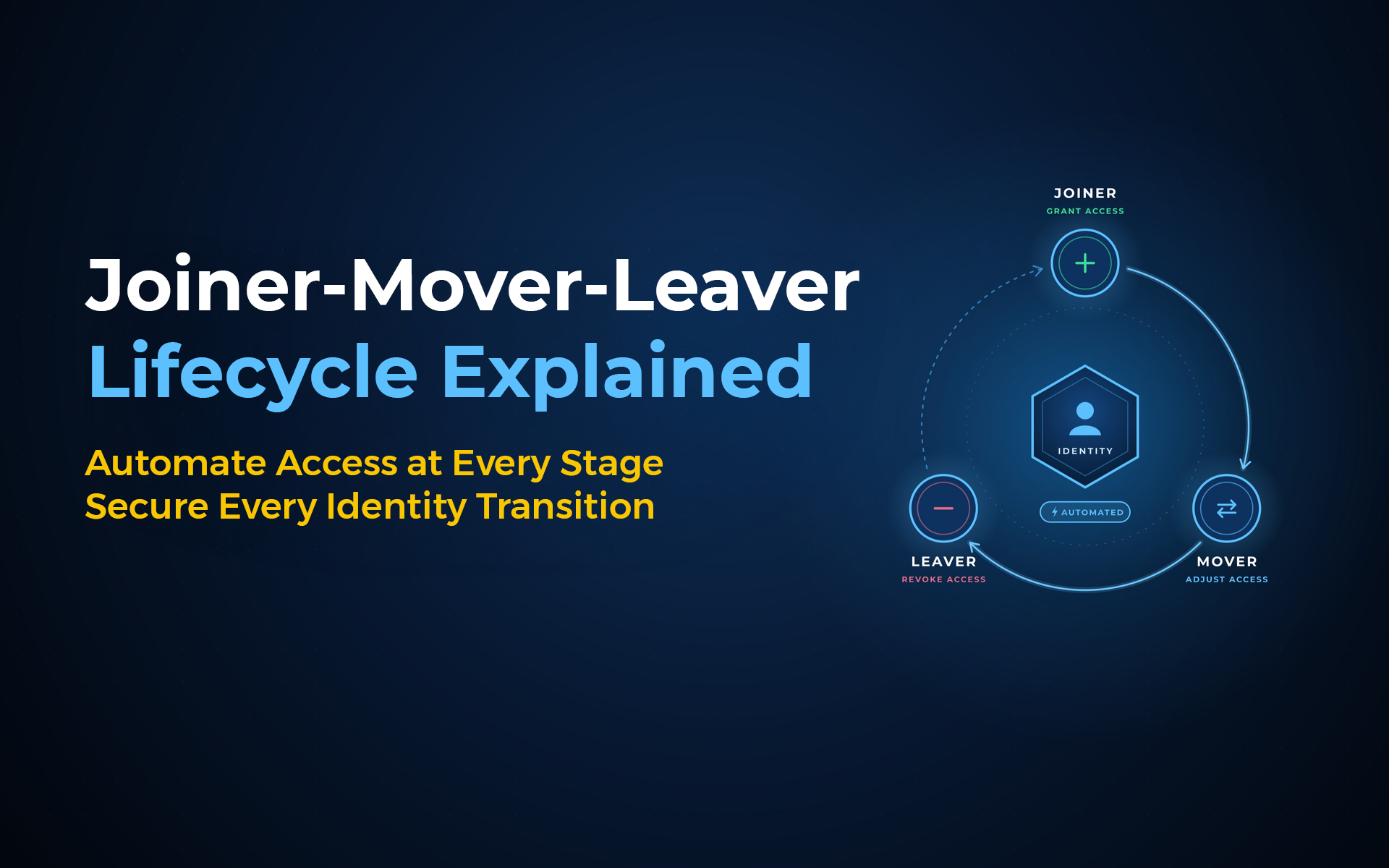
Three workforce events decide most employee access changes: joining, moving and leaving. When those events reach identity systems late, access starts to drift from the person’s real job.
A simple Joiner-Mover-Leaver workflow keeps the lifecycle clear: HR Event → Identity Decision → Access Change → Audit Record.
The Joiner-Mover-Leaver lifecycle links workforce changes to governed identity actions. HR records a hire, role change or exit. Identity logic evaluates what the person should access. Approved changes reach the required systems. The process then records what changed and why. This keeps access closer to current employment reality.
Why 1 simple workflow matters
Meet Daniel. He joins a finance team in Sydney. HR creates his employee record before his first day. Six months later, he moves into procurement. A year later, he leaves the business.
Those three HR events look simple. The access behind them is not. Daniel may use email, collaboration tools, ERP applications, finance systems, shared folders and privileged functions. If each system relies on a different ticket or manual reminder, the employee lifecycle splits into separate tasks.
The JML model gives you one control question at every stage: does this person’s current access still match their current employment context?
Step 1: HR Event starts the lifecycle
The process starts where the workforce change becomes official. That usually means an authoritative HR system or directory records the event.
For a joiner, HR creates the employee record and start date. For a mover, HR changes the role, department, location or position. For a leaver, HR records the termination or end date.
The HR event should start an identity evaluation. It should not blindly grant or remove permissions. The event tells the identity process that employment context changed and access now needs a decision.
Step 2: Identity Decision checks what should change
The identity decision is the control point between the HR event and the target system.
For Daniel’s first day, the process asks which access his finance role requires. When he moves to procurement, it asks two questions: what new access does he need, and what old finance access no longer belongs? When he leaves, it asks which accounts, entitlements and privileged permissions must end.
This is where role logic, policy, approval rules and least-privilege requirements matter. A workforce event creates context. Governance decides the correct action.
Step 3: Access Change turns the decision into action
A decision has little value if the target systems never receive it.
The access change step creates, modifies or revokes the approved access. Joiners receive the access linked to their role. Movers gain relevant access and lose permissions tied only to the previous role. Leavers lose access when the employment relationship ends.
This step matters most across environments with many applications. One disabled central account does not prove every connected application or privileged permission has changed.
Step 4: Audit Record proves what happened
The final step records the lifecycle action. You need to know which event started the change, what decision followed, what access changed and whether the execution completed.
That evidence reduces the gap between policy and proof. An auditor should not have to reconstruct an employee exit from email threads, screenshots and disconnected service tickets.
Australia’s current Information Security Manual says access should be removed or suspended the same day personnel no longer have a legitimate requirement. EU cyber security requirements for covered entities also connect access-right changes to employment changes and termination. In the United States, CISA’s zero trust model points toward more automated identity lifecycles and least-privilege decisions. India’s DPDP Rules 2025 keep stronger personal-data governance and security safeguards in focus.
The 4-Step JML Control Loop
Use this simple loop when you review an existing Joiner-Mover-Leaver process:
- HR Event: Has the authoritative workforce change reached the identity process?
- Identity Decision: Did role, policy and approval logic determine what should change?
- Access Change: Did the required create, modify or revoke action reach every relevant system?
- Audit Record: Do you have evidence of the event, decision, action and result?
If one step breaks, the lifecycle stays incomplete. A fast trigger with no governance creates the wrong access faster. A correct decision with no execution leaves the risk in place. An executed change with no evidence creates an audit problem.
4 mistakes that break the JML flow
- Starting the process from a manual ticket after HR already recorded the change.
- Treating a mover like a new joiner and adding access without removing old permissions.
- Closing a leaver ticket after disabling one account without checking connected and privileged access.
- Recording the approval but not the final provisioning or revocation result.
Where Anugal fits
Anugal approaches Joiner-Mover-Leaver as a continuous identity lifecycle anchored to HR-driven workforce change. Its JML model detects joiner, mover and leaver events from HR systems or authoritative directories, evaluates role and policy context, then drives create, modify or revoke actions.
For movers, Anugal’s current JML capability focuses on access recalculation and removal of outdated entitlements. For leavers, it focuses on account disablement, access revocation, privileged-access removal and lifecycle evidence. The objective stays consistent across all three stages: keep access aligned with the person’s current status.
Frequently asked questions
What does Joiner-Mover-Leaver mean in identity management?
Joiner-Mover-Leaver describes the three main employee lifecycle stages that change digital access. A joiner needs initial access, a mover needs access recalculated for a new role or context, and a leaver needs access removed when employment ends.
What should trigger a JML workflow?
An authoritative workforce event should trigger the workflow. Common examples include a hire, start date, role change, department move, location change, contract change or termination. The event should start access evaluation rather than grant access without policy checks.
Why is the mover stage often missed?
Mover events feel less urgent than joining or leaving, so teams often add new permissions and forget old ones. Over time, employees collect access from earlier responsibilities. A mover workflow should evaluate both what to add and what to remove.
Does disabling a user account complete offboarding?
Not always. The person may still have application accounts, privileged permissions, shared access or other entitlements. A complete leaver process should verify the relevant access changes across the systems in scope and retain evidence of the result.
How does Anugal support the JML lifecycle?
Anugal connects HR-driven lifecycle events with governed identity actions. Its current JML model covers event detection, role and policy evaluation, access provisioning or recalculation, revocation and traceable lifecycle records.
Next step
See how Anugal approaches HR-driven Joiner-Mover-Leaver governance.
Prefer a direct conversation? hello@businesscoresolutions.com