

Anugal · AI Agent Identity Governance Series
Shadow AI Agents: How to Find What Security Cannot See
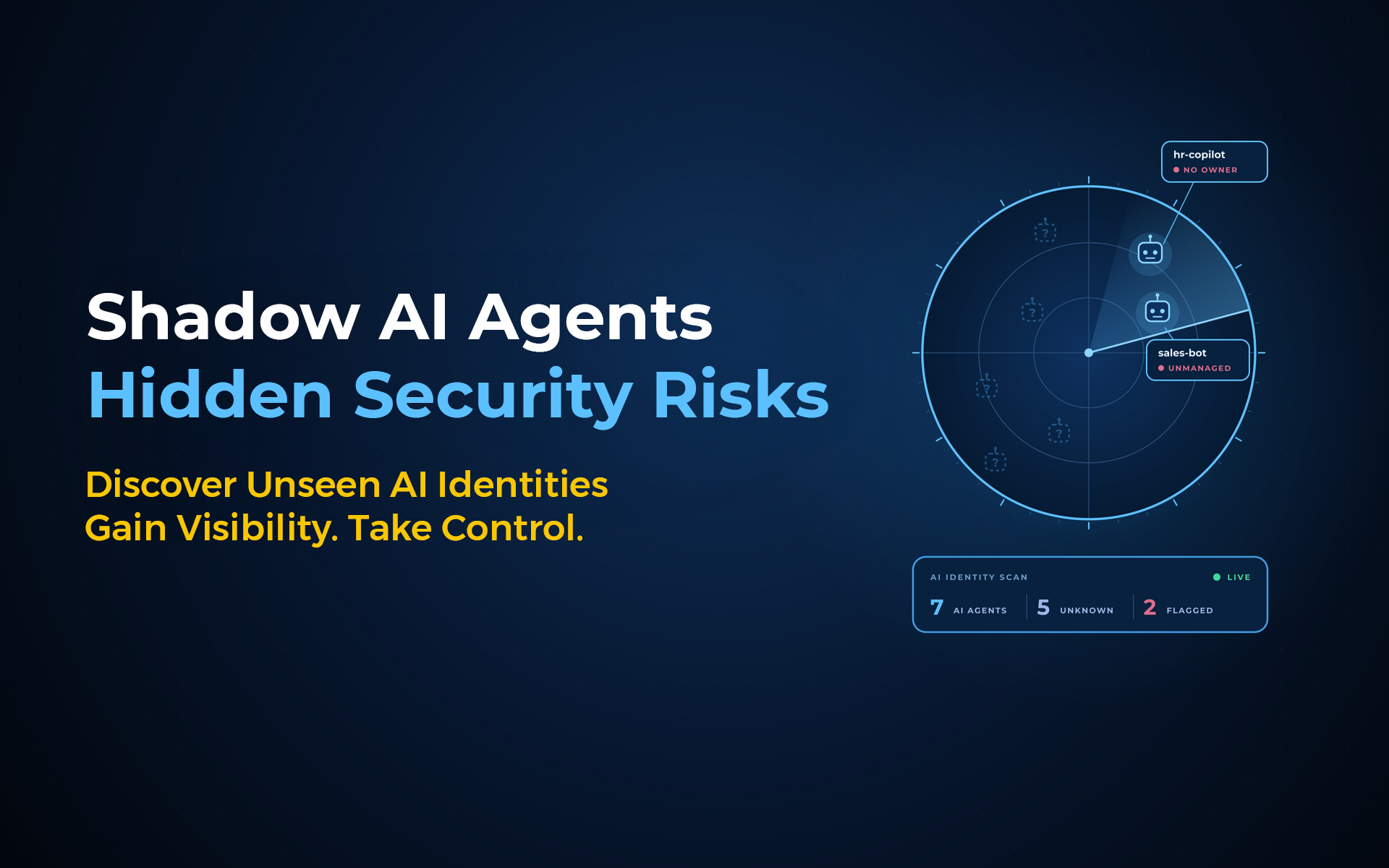
You cannot govern an AI agent you do not know exists. That sounds obvious, yet agent creation is increasingly decentralized. Teams can build an agent in a cloud console, low-code platform, SaaS product or local development environment and connect it to enterprise data before identity teams ever see it.
Shadow agents are not only a technology inventory problem. They are an access problem. Every undiscovered agent may carry tokens, API keys, delegated permissions or service-account access. It may also operate outside standard joiner-mover-leaver processes, which means nobody is forced to review its owner, purpose, scope or retirement date.
A practical discovery program should combine platform inventory with identity telemetry. Start with OAuth grants and newly issued tokens, then correlate them with API activity, application registrations, cloud workloads and secret stores. The objective is not simply to create a list. Each discovery needs a governance outcome: register, restrict, remediate or retire.
Discovery should also be continuous. Agents are easy to create and easy to duplicate. A quarterly spreadsheet will fall behind quickly. Security teams need a repeatable way to identify new non-human actors, connect them to a sponsor, understand their authority and decide whether their access is still justified.
The TRACE framework
-
T
Tokens
Look for OAuth grants, API tokens, PATs and machine credentials used by automation or AI tooling.
-
R
Registries
Review approved AI platforms, cloud marketplaces, developer environments and agent catalogs.
-
A
API activity
Analyze unusual or machine-speed API patterns, new integrations and tool-calling behavior.
-
C
Credentials
Find shared secrets, static keys and service accounts with unclear purpose or ownership.
-
E
Endpoints
Inspect runtime hosts, containers, serverless workloads and local developer environments where agents may execute.
Where Anugal fits
Anugal can support a governed inventory for machine and non-personal identities, connect discovered identities to ownership and lifecycle records, and route them through access review, revocation and audit processes. This turns agent discovery into an identity-governance workflow rather than a one-time security scan.
Action checklist
- Start with OAuth grants, API tokens, service accounts and secrets with unclear owners.
- Map discoveries to business owners before deciding on permissions.
- Classify each agent by production impact and data sensitivity.
- Create a workflow for register, restrict, remediate or retire decisions.
- Repeat discovery continuously, not only during audits.
Key takeaway
Discovery is the start of governance. Every shadow agent should end in a clear register, restrict, remediate or retire decision.
Bring shadow agents under governance
See how Anugal connects discovered agents and non-human identities to owners, lifecycle records and access reviews, so every discovery ends in a clear decision.
References
- NIST NCCoE - Software and AI Agent Identity and Authorization initiative (2026).
- NIST publications and stakeholder work on AI-agent identity, authorization, delegation and credential security.
- Current industry guidance on non-human identity, agent discovery, ownership and runtime authorization.