

5 Problems Manual Joiner-Mover-Leaver Processes Create
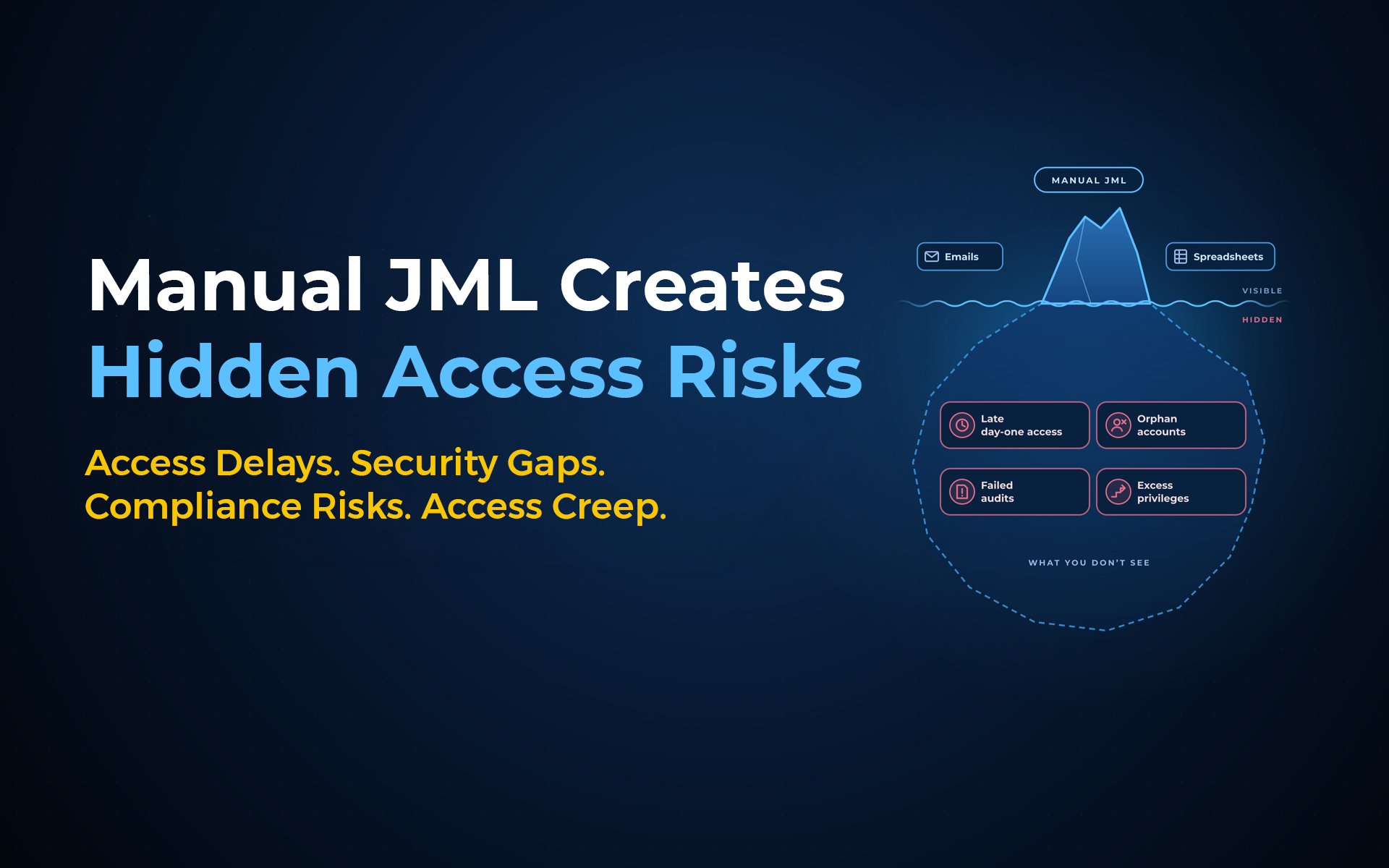
Five small manual gaps in the employee lifecycle can leave people waiting for access, carrying old permissions or keeping accounts after they leave.
The problem rarely starts with one dramatic failure. It starts with a ticket that arrives late, a spreadsheet nobody updates, or an old entitlement that survives a role change.
Manual Joiner-Mover-Leaver processes create five common problems: delayed onboarding, access accumulation, forgotten accounts, inconsistent revocation and weak audit evidence. Each problem starts when workforce changes and access changes move at different speeds. Connecting HR events to governed identity actions helps close that gap.
A simple employee story shows all 5 problems
Meet Nisha. She joins a sales team in Bengaluru. Her manager requests access through email. IT creates some accounts on day one and another application two days later. Eight months later, Nisha moves into sales operations. The new team adds access, but nobody removes two permissions from her old role.
A year later, Nisha leaves. Her main account is disabled quickly, but one application account stays active because it sits outside the standard offboarding checklist.
Nothing in that story sounds unusual. That is exactly why manual JML deserves attention.
Problem 1: Joiners wait because access starts after the person arrives
A manual onboarding process often begins with a message from the manager. If that message arrives late, identity work starts late too.
The new employee then spends the first day asking for access instead of doing the job. IT teams also receive urgent requests because every missing permission becomes a separate task.
A better pattern starts from the HR record and start date. The workforce event gives the identity process time to evaluate the role, required access and approvals before the employee needs the systems.
Problem 2: Movers collect access from more than 1 role
Role changes create a quieter problem. The employee needs new access, so the organisation focuses on adding it. Old access often receives less attention.
Nisha’s move from sales to sales operations changes her responsibilities. If the process only grants the new permissions, her identity begins to represent two jobs instead of one.
Australian cyber guidance describes this pattern as privilege creep and recommends reviewing and restricting account access as people change roles. The control principle is simple: current responsibility should drive current access.
Problem 3: Forgotten accounts survive the employee exit
A leaver process looks complete when the main directory account is disabled. It may still leave access elsewhere.
Standalone applications, local accounts, privileged access and systems outside the normal checklist create blind spots. If nobody verifies each required revocation, the organisation may close the HR exit while digital access remains open.
Current Australian government security guidance says organisations should remove or suspend system access the same day a person no longer has a legitimate requirement. The direction reflects a wider identity trend: employment status and system access should not drift apart.
Problem 4: Revocation depends on who remembers the process
Manual offboarding often relies on people knowing which systems matter. That creates different outcomes for different employees.
One manager remembers the finance application. Another forgets it. One IT administrator checks privileged access. Another only disables the main user account. A documented checklist helps, but the checklist still depends on manual execution and proof.
A lifecycle process should connect the termination event to the systems and entitlements in scope, execute the required actions, and record the result.
Problem 5: Audit evidence lives across too many places
Manual JML creates a second workload after the access work itself: proving what happened.
The HR event may sit in one system. The manager approval sits in email. The service ticket records a request. A screenshot proves one account was disabled. Another application has no visible evidence at all.
When an auditor asks when access changed and who approved it, the team must reconstruct the story. That turns a routine lifecycle event into evidence collection.
Why these problems matter across 4 regions
Australia, India, Europe and the United States use different legal and security frameworks, but identity programmes face a similar operating expectation: know who has access, align permissions to legitimate need, remove access when the need ends, and retain evidence.
Australia’s security guidance explicitly addresses privilege creep and same-day removal when access is no longer required. EU requirements for covered entities connect access-right changes with role changes and employment termination. CISA’s zero trust maturity model in the United States points toward automated identity lifecycles and least privilege. India’s DPDP Rules 2025 place data protection and security safeguards under sharper operational focus.
The takeaway is not that one JML workflow satisfies every regulation. The takeaway is that manual identity drift makes governance harder in every region.
The 5-Point Manual JML Check
Use these five questions to find where manual effort creates risk:
- Joiner timing: Does access work start from the HR event or from a later manual request?
- Mover cleanup: Does every role change evaluate access to remove as well as access to add?
- Leaver coverage: Does offboarding reach every application and privileged entitlement in scope?
- Revocation consistency: Does the process depend on a person remembering each step?
- Evidence: Do you record the event, approval, action and final result in a traceable flow?
A “no” on any one of these questions shows where the lifecycle may break.
Where Anugal fits
Anugal treats Joiner-Mover-Leaver as one governed identity lifecycle anchored to HR-driven events. Its current JML capability detects joiner, mover and leaver changes, evaluates role and policy context, and drives create, modify or revoke actions across connected systems.
For movers, the focus includes recalculating access and removing outdated entitlements. For leavers, the flow covers account disablement, access revocation, privileged-access removal and recorded evidence. This shifts JML from a collection of reminders into a repeatable identity process.
Frequently asked questions
What is the biggest risk in a manual JML process?
The biggest risk is identity drift. Workforce reality changes, but access does not change at the same time. That creates delayed access for joiners, excess permissions for movers, and residual access for leavers.
Why do mover workflows need both grants and removals?
A mover leaves one responsibility and takes another. Adding new access without reviewing the old permissions lets historical access accumulate. The workflow should recalculate the person’s access against the new role and remove what no longer fits.
Is a manual checklist enough for leaver access removal?
A checklist is better than an undocumented process, but execution still depends on people completing every step. Stronger lifecycle control links the termination event to required revocation actions and records whether each action completed.
Why does audit evidence matter in JML?
Evidence shows that the organisation acted on the workforce change. It should connect the HR event, access decision, approval where required, final system action and result. Without that chain, teams spend more time reconstructing events during reviews.
How does Anugal reduce manual JML work?
Anugal uses HR-driven lifecycle events to start governed access decisions. Its JML model supports provisioning for joiners, access recalculation for movers, revocation for leavers and traceable records of lifecycle actions.
Next step
See how Anugal approaches HR-driven Joiner-Mover-Leaver governance.
Prefer a direct conversation? hello@businesscoresolutions.com