

Why Non-Human Identities Are the Biggest Blind Spot in Enterprise IAM
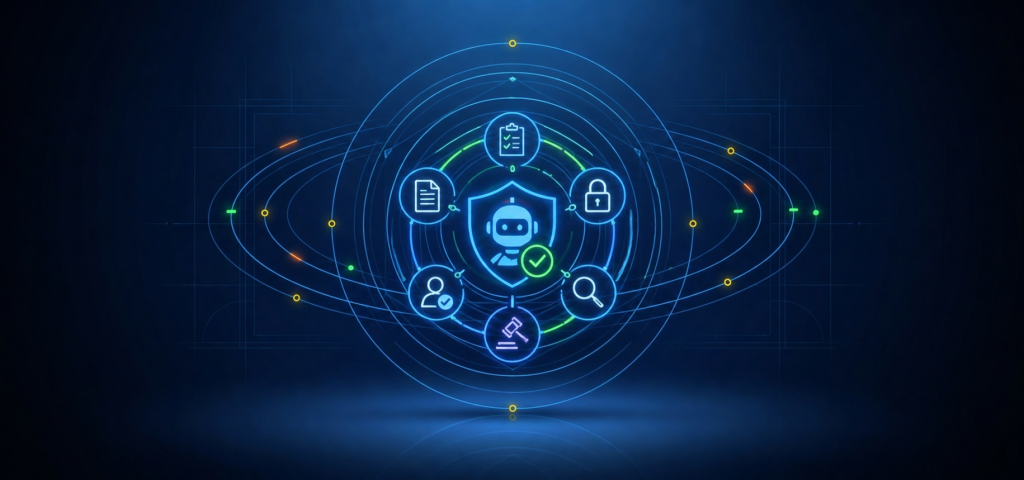
A service account ran your nightly database refresh. An API key pulled customer data into a marketing tool. A Kubernetes workload signed a payment instruction. None of those identities is governed the way your employees are. Non-human identities outnumber humans by up to 100 to 1, run with excessive privilege in 97% of cases, and rarely appear in access reviews. Closing this blind spot takes a three-class governance model. Service accounts, APIs and tokens, and workload identities each need governance built on top of the IGA program you already run.
Together they bring the entire non-human population inside the same governance perimeter your employees already operate in.
What are non-human identities?
Non-human identities are the credentials and identities used by software rather than people. They span a wide range of categories that share a single trait: machines, not humans, do the authenticating. Common types in a modern enterprise include the following.
- Service accounts are accounts in Active Directory, Unix systems, applications, or databases that run scheduled jobs and background tasks.
- API keys and access tokens are static credentials issued by SaaS platforms, internal services, and cloud providers for programmatic access.
- OAuth tokens and client credentials allow applications and integrations to act on behalf of a user or service.
- Machine certificates are X.509 credentials used in mutual TLS to authenticate microservices, devices, and infrastructure.
- SSH keys authenticate automation, deployment pipelines, and operators against servers and infrastructure.
- Cloud IAM roles and service principals are AWS, Azure, and GCP identities that grant programmatic access to cloud resources.
- Kubernetes service accounts and workload identities are identities assigned to pods and containers, often issued through SPIFFE/SPIRE as short-lived, attested credentials.
- Automation bots and AI agents are RPA bots, scripts, and agentic AI processes that authenticate and act inside enterprise systems.
The math that broke enterprise IAM
Non-human identities outnumber humans by 80 to 1 according to CyberArk, with the ManageEngine 2026 Identity Security Outlook reporting 100 to 1 in typical environments and 500 to 1 in some. The growth is structural, not seasonal. Cloud-native architectures, microservices, CI/CD pipelines, SaaS-to-SaaS integrations, and agentic AI all create machine credentials faster than quarterly access review cycles can track. Entro Security’s 2025 State of Non-Human Identities found that 97% of these identities hold more privilege than they need, and that 0.01% of them control 80% of cloud resources. The largest population on the network is the one the IGA program never indexed.
Why traditional IGA tools miss most non-human identities
Most enterprise IGA programs were architected before non-human identities became the dominant identity class. Silverfort’s 2025 research found that 94.3% of organizations lack full visibility into their service accounts. Three structural mismatches explain the gap.
- Service accounts predate the IGA program. Many were created in Active Directory before identity governance existed and were never enrolled in joiner-mover-leaver workflows. In 46% of cases, per Silverfort, they still authenticate through deprecated NTLM.
- APIs and tokens come from developer toolchains, not access reviewers. A CI/CD job, a serverless function, or a SaaS webhook creates credentials that bypass access review and never land on a rotation calendar. GitGuardian reports that 64% of secrets exposed in 2022 remained valid in early 2026.
- Workload identities outpace certification cycles. Containers, microservices, and AI agents move faster than quarterly reviews can match. A pod that lives ninety seconds will never appear in a review cycle.
A three-class governance model for non-human identities
The three classes of non-human identity share a common problem but require different control models. Service accounts behave most like humans and respond to the same governance disciplines. APIs and tokens behave like secrets and need a credential lifecycle of their own. Workload identities behave like ephemeral processes and need attestation rather than credentials. The model applies the instincts the IGA program already uses for humans, scaled to fit each class.
1. Service accounts: apply joiner-mover-leaver discipline
Service accounts are the closest analog to human identities and the easiest to bring under existing IGA primitives. The first move is ownership: every account needs a named human or team responsible for it. Joiner-mover-leaver workflows then tie to system or application lifecycle events rather than HR triggers, so when a database is decommissioned, every service account on it is reviewed. Certifications run on the cadence used for privileged human users. Deprecated protocols like NTLM retire on a fixed timeline. Map controls to the OWASP Non-Human Identity Top 10 (2025), particularly NHI1 Improper Offboarding and NHI5 Overprivileged NHI.
2. APIs and tokens: apply secret lifecycle and segregation of duties
APIs and tokens are credentials, not just identities, and need a lifecycle the IGA program does not run on its own. The starting point is discovery: every key, token, and certificate located across vaults, code repositories, CI/CD pipelines, and developer tools, not only those the IGA platform integrates with. The program then enforces rotation against a maximum lifetime, scopes each credential to the smallest resource set its consumer genuinely needs, and applies segregation of duties to the secrets one application or developer can hold. Map controls to OWASP NHI2 Secret Leakage and NHI7 Long-Lived Secrets. Where possible, replace static keys with short-lived tokens issued by an identity provider already wired into IGA.
3. Workload identities: apply attestation, not credentials
Workload identities break credential-based governance entirely. Containers tear down in seconds, microservices outnumber the engineers who built them, and AI agents spin up for a single task. None can safely hold a static credential. The CNCF-graduated SPIFFE standard and its SPIRE implementation solve this through attestation: each workload proves identity at runtime through cryptographic evidence about the node and process running it, and the platform issues a short-lived SVID, typically valid for minutes, that rotates automatically. Govern this layer by registering workload identities in a central trust domain and routing them into the review and audit pipelines that already cover service accounts and humans.
Mapping non-human identity controls to your existing IGA program
The mapping is less about adding tools than extending what already runs. It follows a sequence any team with an IGA program can execute.
- Discovery. Sweep Active Directory, the password vault, every cloud IAM service, code repositories, CI/CD platforms, and SaaS connectors into one inventory of NHIs. Automated discovery is the only path that closes within a quarter.
- Classification. Sort each NHI into one of the three classes by what it is and how it authenticates, not by which team created it.
- Ownership assignment. Attach a named human or team to every NHI. Orphaned NHIs trigger automatic review rather than indefinite life on the network.
- Risk scoring. Prioritize remediation across tens of thousands of NHIs by combining privilege level, exposure surface, and last-rotation date.
- Workflow integration. Plug each class into the existing JML, certification, and audit pipelines, applying the controls in the table below.
| NHI Class | Primary Risks (OWASP NHI Top 10) | Governance Control | Existing IGA Equivalent |
|---|---|---|---|
| Service accounts | NHI1 Improper Offboarding, NHI5 Overprivileged NHI, NHI4 Insecure Authentication | Owner assignment, JML workflow, scheduled certification, deprecated-protocol retirement | Joiner-mover-leaver, access reviews, role mining |
| APIs and tokens | NHI2 Secret Leakage, NHI7 Long-Lived Secrets, NHI9 NHI Reuse | Discovery, mandatory rotation, scope-limiting, segregation of duties | Vault integration, SoD policy library, audit reporting |
| Workload identities | NHI4 Insecure Authentication, NHI6 Insecure Cloud Deployment | Attestation, short-lived SVIDs, trust domain registration | Identity provider integration, audit trail aggregation |
Each row tells the same story: the control already exists. The inventory and the workflow trigger are what have to extend.
Where Anugal fits
Anugal is the governance layer that brings non-human identities inside the same operating model as the humans the existing IGA program already governs. It runs alongside SailPoint or Saviynt and extends coverage to the 60 to 70% of applications and identities that traditional IGA tools miss. Anugal applies joiner-mover-leaver automation, AI-driven access reviews, and SoD policy enforcement to service accounts; integrates with the password vault and access-management capabilities for APIs and tokens; and adds Machine Identity Management based on SPIFFE/SPIRE on the roadmap to complete the three-class model. Learn more at www.anugal.ai.
Conclusion
Non-human identities are not a separate problem to solve. They are the same governance problem the IAM program already knows how to solve, applied to a category that grew faster than the program could absorb. The three-class model brings service accounts, APIs and tokens, and workload identities into one operating model that builds on the discipline already enforced for humans. The blind spot closes once the same review, certification, and audit cadence covers every identity in the enterprise.
Talk to our team about closing the non-human identity gap in your environment.