Healthcare & Life Sciences

Protect patient trust while enabling clinical agility

Enforcing Access Control Across Clinical, Research, and Operational Systems

Explore More alt

The Reality of Access Risk in Healthcare & Life Sciences

Behind every patient record, medication order, clinical decision, research dataset, and connected medical device lies identity in motion. Across hospitals, pharmaceutical companies, research labs, and life sciences organizations, that identity must move across EHR systems, lab platforms, billing applications, research databases, and device networks.

Yet access changes rarely execute at the same speed as clinical operations. Role updates lag behind shift rotations. Temporary access granted for procedures or trials remains active beyond necessity. Cross-system provisioning gaps leave clinicians waiting or worse, leave excessive access in place long after responsibility changes.

This is no longer just an IT inefficiency. It is an operational risk. Delayed access can disrupt care delivery. Persistent access can expose sensitive patient and research data. In healthcare and life sciences, identity execution gaps directly affect safety, compliance, and institutional trust.

The Core Challenges Healthcare & Life
Sciences Organizations Face

Workforce Mobility in Clinical Environments
  • Clinical environments operate 24/7 with rotating shifts, locum doctors, contract nurses, research collaborators, and emergency access needs.
  • Manual Joiner–Mover–Leaver processes cannot keep pace with real-time staffing changes.
  • Access granted for temporary care responsibilities often persists beyond clinical necessity, increasing patient data exposure.
  • Privileged identities span Electronic Health Records (EHR), laboratory systems, pharmacy platforms, clinical trial databases, and connected medical devices.
  • Over-privileged access can bypass clinical safeguards and expose sensitive patient or research data.
  • A single compromised identity can disrupt care delivery, violate patient privacy, and damage institutional credibility.
  • Healthcare workflows are complex and cross-functional.
  • A single user may initiate orders, administer medication, update clinical notes, and approve billing actions within interconnected systems.
  • Without preventive SoD enforcement, billing fraud, prescription misuse, or research data manipulation risk becomes operational reality.
  • Healthcare and life sciences organizations must comply with HIPAA, GDPR, GxP, FDA regulations, and regional data protection mandates.
  • Regulators demand provable access controls protecting patient and clinical research data.
  • Traditional IGA produces reports—but lacks continuous enforcement aligned to patient care and research operations.

Why Traditional IGA Falls Short for Healthcare & Life Sciences

Most IGA platforms were built for corporate office environments with static roles and periodic review cycles.

Healthcare & Life Sciences requires:
  • Real-time access alignment for clinical shifts
  • Context-aware privileged control
  • Time-bound emergency access
  • Continuous compliance evidence
  • Cross-system orchestration across EHR, research, and operational platforms

What Orchestrated Identity Enables in Healthcare & Life Sciences

  • Lifecycle governance

  • Preventive control

  • SoD Enforcement

  • Third-Party Governance

  • Risk Intelligence

Lifecycle-Governed Workforce Access

When HR or workforce attributes change:

  • Access across EHR, pharmacy, lab, and billing systems updates automatically.
  • Obsolete permissions are removed immediately.
  • Role-based and department-based access remain aligned to patient care responsibility.

No delays. No residual access. No patient data exposure from outdated permissions.
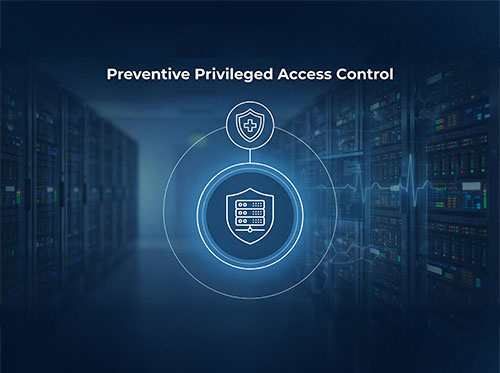
Preventive Privileged Access Control

Orchestration enforces:

  • Purpose-specific administrative access
  • Time-bound privilege elevation
  • Automatic revocation after clinical need
  • Full traceability of privileged decisions

Privileged access becomes accountable not assumed.
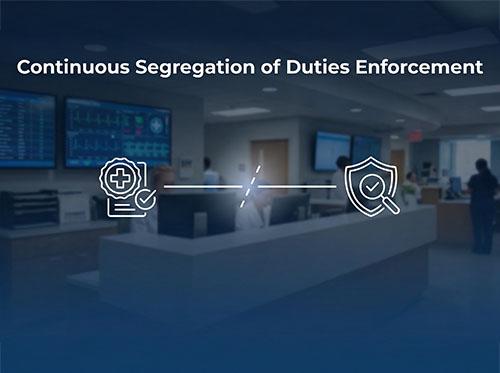
Continuous Segregation of Duties Enforcement

Instead of discovering issues during regulatory audits:

  • SoD risks are evaluated at request time.
  • Conflicting access combinations are blocked before approval.
  • Mitigations are documented and enforced dynamically.

Risk is prevented in care workflows, not recorded later.
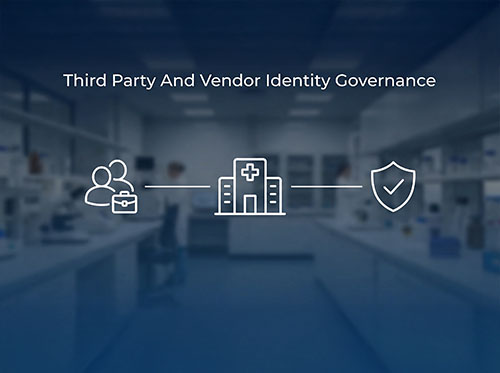
Third-Party & Research Partner Identity Governance

Healthcare and life sciences rely heavily on third party help . Orchestrated governance ensures:

  • Time-bound and study-specific access
  • Automatic expiry aligned to contracts or trial phases
  • Clear sponsorship and clinical ownership
  • Audit-ready lifecycle documentation

No more dormant third-party access inside patient or research systems.

Continuous Identity Risk Intelligence

Advanced orchestration enables:

  • Detection of unusual patient record access patterns
  • Identification of privilege creep across departments
  • Automated risk alerts tied to clinical sensitivity
  • Context-preserved escalation for compliance teams

Identity risk becomes visible, measurable, and aligned with patient safety.

Why This Matters to Healthcare & Life Sciences Leadership

lock

Reduced patient data exposure across clinical and research systems

lock

Lower risk of misuse within EHR, lab, and billing platforms

lock

Stronger HIPAA and healthcare regulatory compliance posture

lock

Fewer audit findings related to access governance and controls

lock

Improved protection of research data and intellectual property

lock

Clear accountability for access decisions across care delivery and research
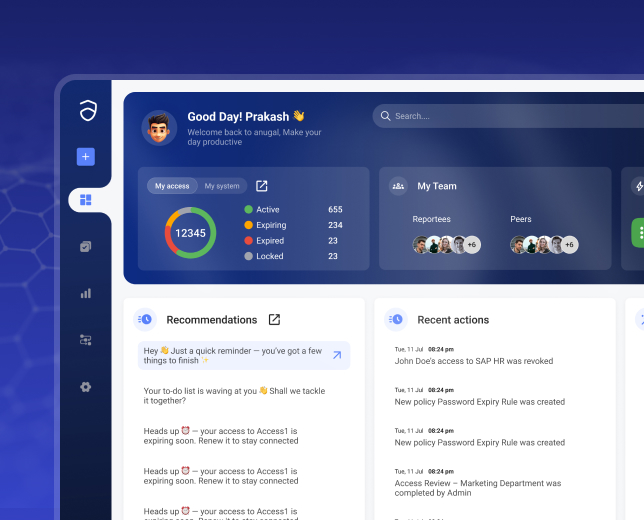
Assess Healthcare Access risk with Anugal

Use our ROI calculator alt