Approval & Access Control Engine

Eliminate untraceable access approvals across your entreprise

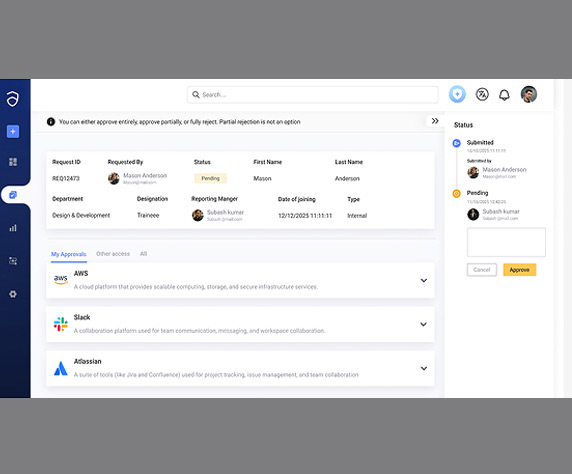
Anugal ensures every approval decision is deliberate, policy-enforced and owned hence access is granted only when it is justified.


Explore More alt

Every access approval is a governed authorization decision with explicit accountability

As enterprise environments scale, access approvals increase in both volume and urgency. What should function as deliberate authorization decisions are often reduced to routine workflow actions executed under time pressure.

Approval authority is misaligned, decision context is limited, and governance checks are applied inconsistently or too late. The result is a growing gap between approved access and defensible authorization, which becomes visible during audits, investigations, and security incidents.

Where Approval Governance Breaks

Approvals exist in most enterprises, but authorization control is fragmented, informal, and insufficient to withstand audit or risk scrutiny.

Hierarchy-driven approvals

Access is approved based on reporting lines rather than true ownership or access impact.

Limited decision context

Approvers lack visibility into what access enables, its risk level, or policy implications.

Policy checks applied too late

Eligibility, SoD, and risk violations are often detected after access is provisioned.

Non-defensible audit records

Approval logs show who clicked “approve,” but not why access was permitted.

How Anugal approach approvals?

Anugal governs approvals as authorization decisions, not workflow tasks. Approval authority is dynamically determined based on access type, sensitivity, and ownership, while governance rules are evaluated before approval routing occurs. This ensures only eligible, policy-compliant access ever reaches an approver, and every approval is backed by enforceable justification.

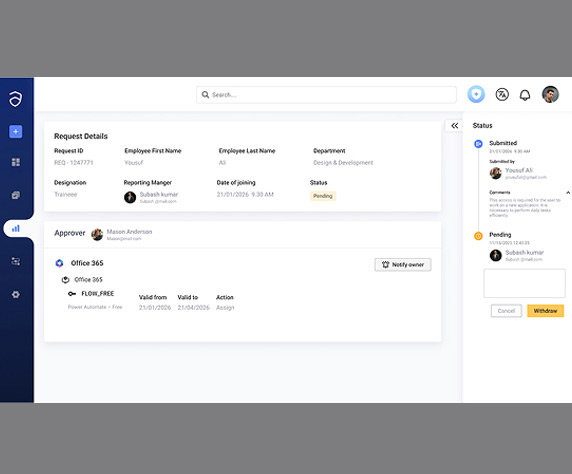
Ownership-Based & Delegated Approvals

Approval authority is aligned to real access ownership.

  • Routes approvals to application, data, or role owners
  • Prevents approvals by uninformed or unrelated managers
  • Supports delegation without breaking accountability
  • Preserves ownership clarity for audit and review

Conditional & Multi-Level Approval Routing

Approval paths adapt to access risk.

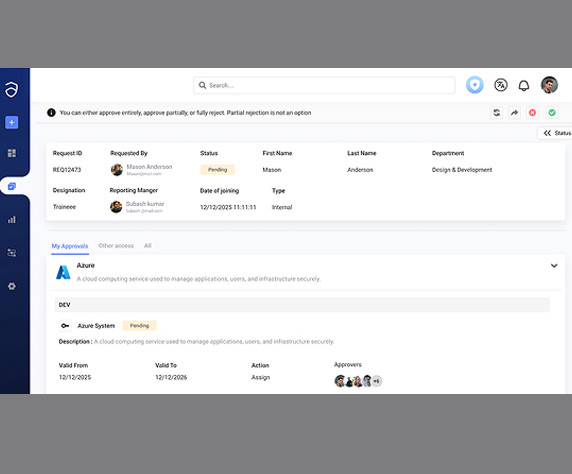
  • Dynamically routes approvals based on role and sensitivity
  • Triggers additional approval layers for high-risk access
  • Supports parallel and sequential approval models
  • Prevents blanket approvals for sensitive entitlements

Policy-Enforced Authorization Controls

Governance rules are applied before approval decisions.

  • Evaluates eligibility, SoD, and risk at request time
  • Blocks ineligible access before reaching approvers
  • Ensures approvals cannot override policy violations
  • Reduces post-provisioning remediation effort

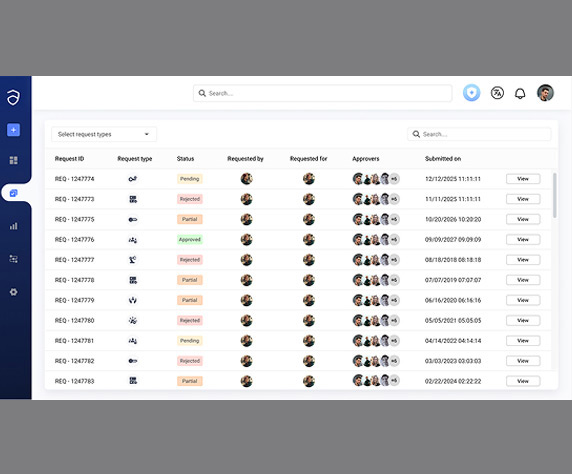
Approval Decision Traceability

Every approval is recorded as a defensible decision.

  • Captures who approved, under which policy, and why
  • Preserves decision context beyond access provisioning
  • Provides clear evidence for audits and investigations
  • Reduces audit clarification and follow-up cycles

Business impact
of Anugal

lock

Fewer inappropriate access approvals

lock

Reduced need for post-provisioning corrections

lock

Stronger accountability for access decisions

lock

Clear, defensible audit evidence by default

lock

Lower audit findings related to weak authorization
Calculate audit risk reduction from policy-enforced approvals

Explore More alt

How Access Requests Become Defensible
Authorization Decisions

Access requests in Anugal progress through a governed decision model that evaluates eligibility and risk before
approval, ensuring only justified access is executed.