
Anugal.AI (Agentic Architecture)
From identity signals to governed action without losing control
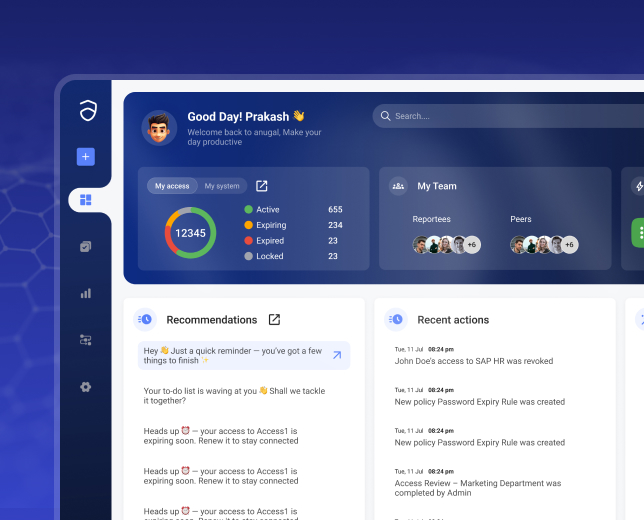
Anugal.AI brings agent-driven intelligence to identity governance, enabling continuous risk detection, prioritization, and orchestration




-
Identity Signals Are Ingested
-
Context Is Constructed
-
Recommendations Are Generated
-
Human Decisions Are Applied
-
Orchestrated Execution Occurs
-
Continuous Learning Feeds Back
- Workforce lifecycle changes
- Access assignments and removals
- Approval actions and overrides
- Usage patterns and dormancy
- SoD conflicts and risk indicators
No action is taken yet only observation.
- What access enables in business terms
- How roles interact (especially in SAP)
- What “normal” looks like for peers
- Where policy or risk thresholds apply
This replaces raw data with decision-ready context.
- Approve, deny, or modify access
- Revoke unused or excessive permissions
- Escalate based on risk or impact
- Prioritize review focus
Each recommendation includes clear reasoning, not opaque scoring.
- Retain full authority
- See policy, risk, and peer context
- Understand implications before acting
No automated decisions bypass governance.
- Multi-system provisioning or revocation
- SAP and non-SAP execution paths
- Dependency handling and rollback control
- End-to-end logging and evidence capture
Execution is controlled, not fragmented.
- Approval trends
- Risk escalations
- Policy changes
- Organizational patterns
Governance improves continuously without manual tuning.

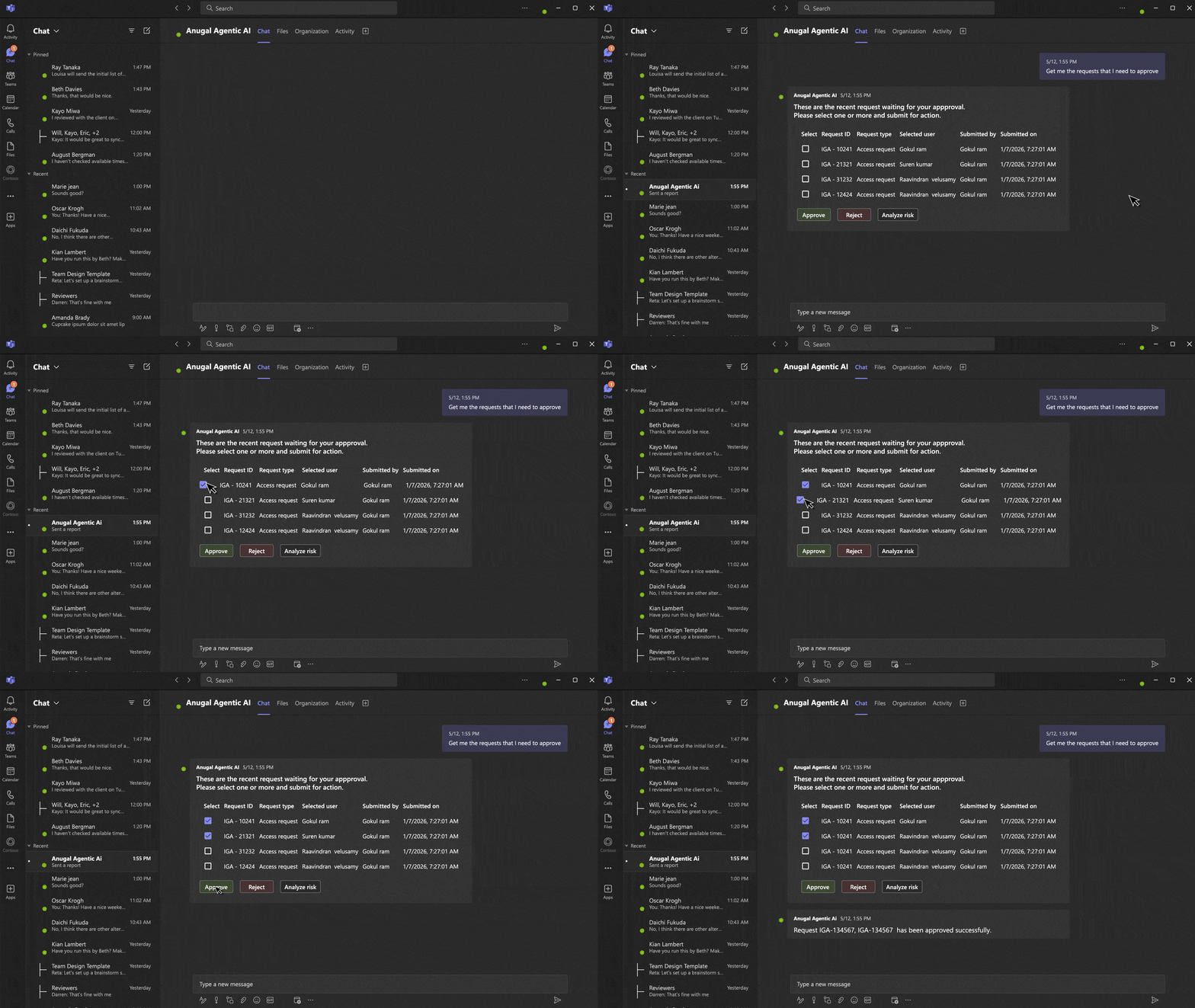
Access Requests & Approvals Approvers receive context, not cryptic role names.
Joiner–Mover–Leaver Governance Access aligns with current responsibility—not historical access.
Access Certifications Reviews focus on risk, not volume.
Segregation of Duties Conflicts are prevented before access is granted.
Role Design & Optimization Roles evolve based on usage and risk signals.
Machine & Third-Party Access Non-human identities are governed with equal rigor.