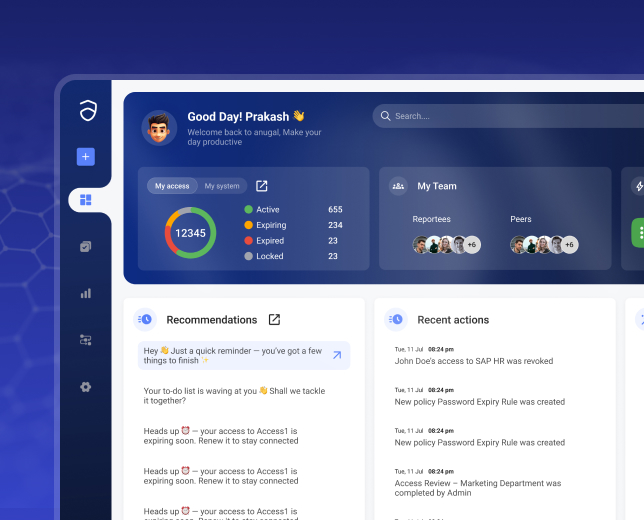

Anugal Co-Pilot
AI-assisted identity decisions, executed with governance
Turn natural language intent into governed identity actions without bypassing control




-
Intent Recognition
-
Identity & Policy Context Resolution
-
Risk-Aware Decision Framing
-
Governed Workflow Orchestration
-
Durable Governance Record
Natural language request captured and classified.
- Interprets conversational input across access requests, approvals, certifications, and status queries
- Maps intent to structured governance actions (request, review, revoke, extend, simulate)
- Validates identity session context before proceeding
- Restricts commands to authorized action types based on user role
Eligibility, role, risk, and SoD evaluated.
- Resolves user identity attributes, department, role hierarchy, and employment status
- Determines request eligibility against access policies and entitlement rules
- Evaluates SoD conflicts and privilege thresholds before options are displayed
- Applies system sensitivity and data classification context
- Filters out ineligible or non-compliant access paths automatically
Access options presented in business language with risk indicators.
- Translates technical entitlements into business-readable access descriptions
- Flags sensitive, privileged, or high-risk access categories
- Displays relevant SoD or policy exposure indicators
- Surfaces time-bound or purpose-bound access alternatives
- Enforces justification prompts for elevated or exception-based access
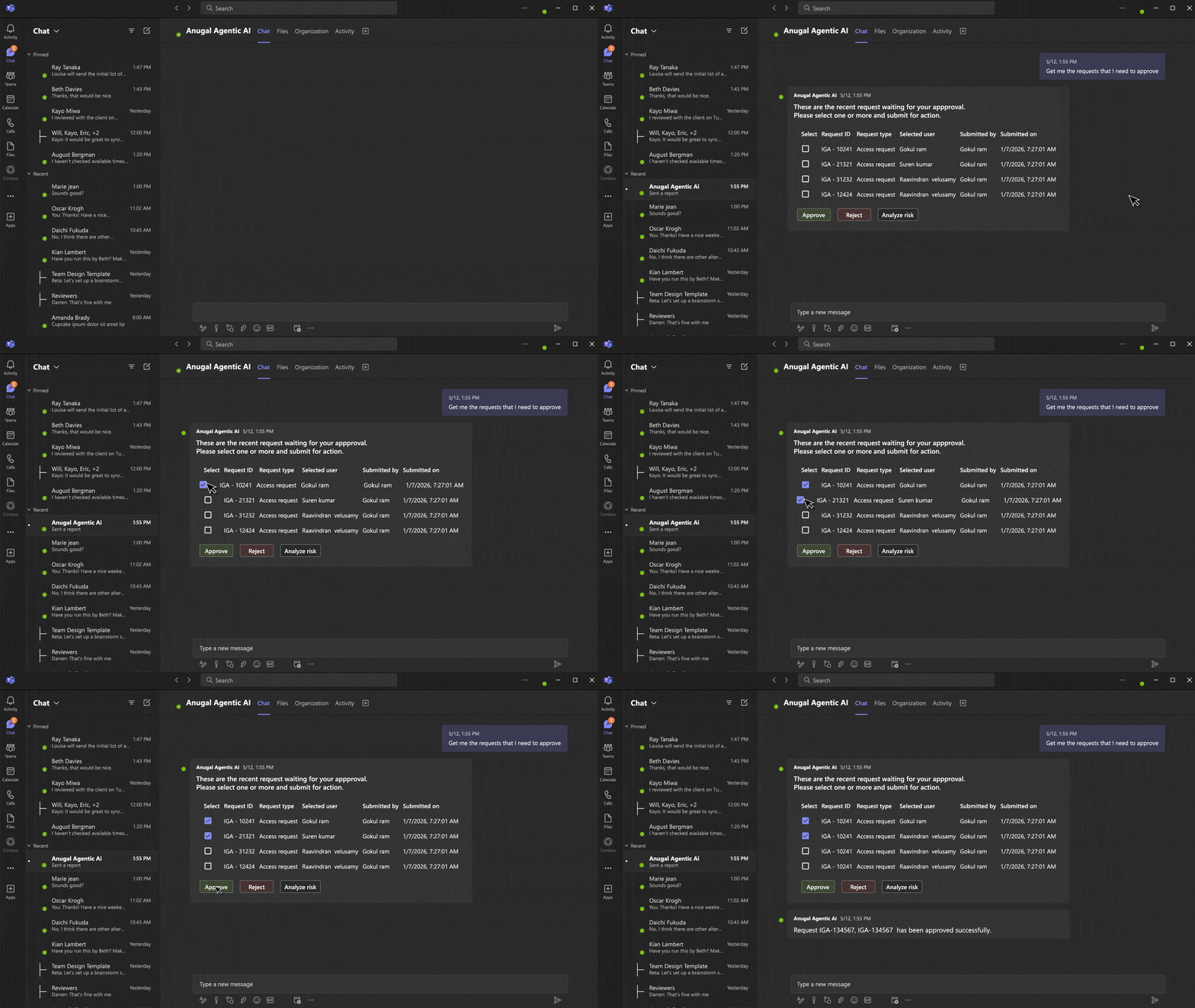
Policy checks, approval routing, enforcement, and provisioning executed.
- Routes decisions to appropriate business, application, or entitlement owners
- Executes real-time policy validation prior to approval finalization
- Initiates provisioning through controlled orchestration across connected systems
- Applies sequencing logic to ensure dependent controls execute in order
- Prevents direct execution outside approved governance workflows
All actions logged with policy context and preserved as audit evidence.
- Records who initiated, reviewed, and approved each action
- Captures policy evaluation results and SoD checks at decision time
- Preserves timestamps, system targets, and execution outcomes
- Maintains append-only audit trails aligned to compliance standards
- Ensures conversational interactions remain fully traceable

End users requesting business access
Managers reviewing sensitive approvals
IAM teams managing access escalations
Approvers handling privileged exceptions
Business owners validating sensitive access
Auditors reviewing decision evidence trails